Meituan Unveils Open-Source AIGC Poster Generation Framework with Generation-Editing-Evaluation Closed Loop
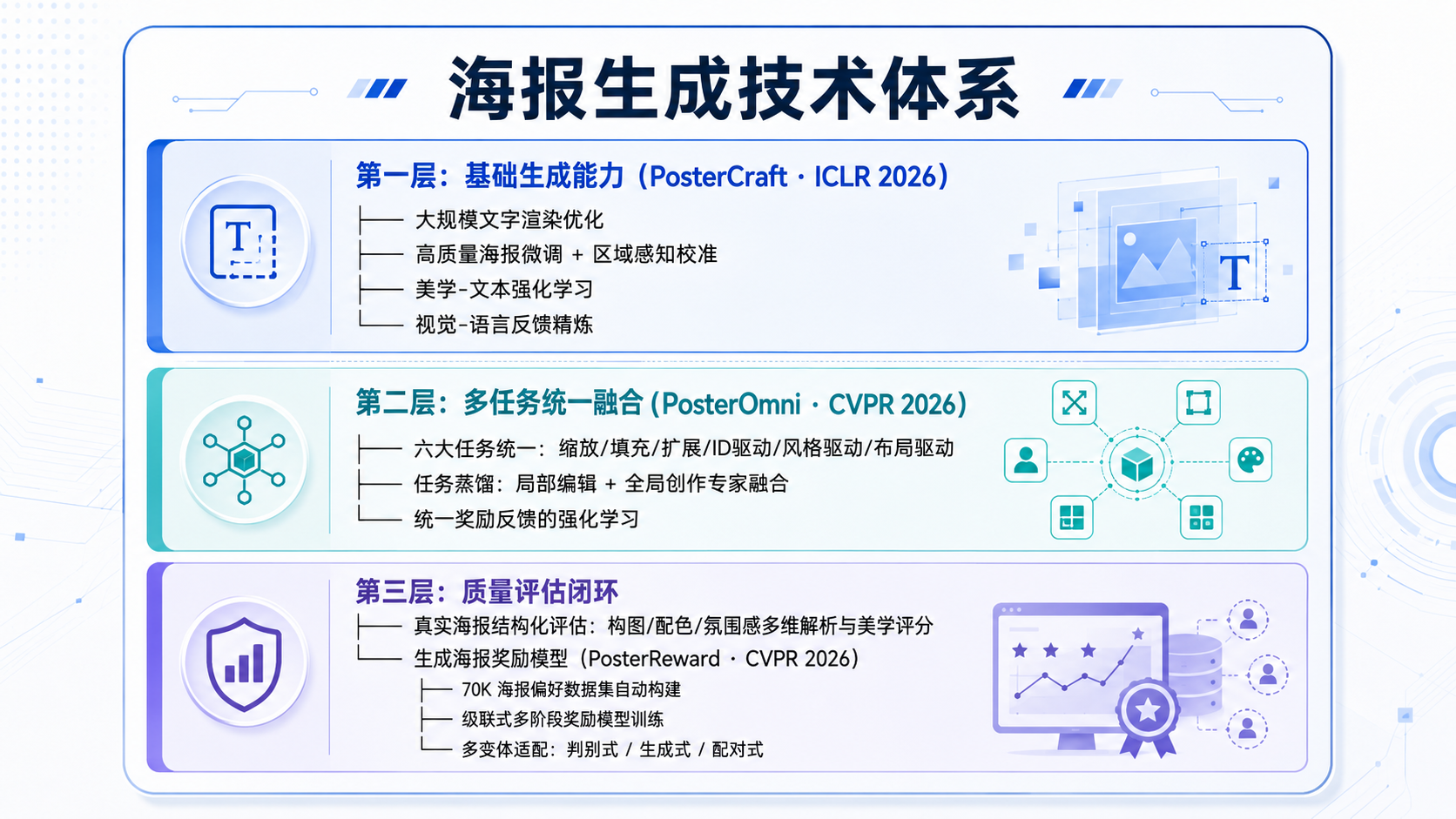
Meituan's intelligent creation team has announced the development and open-sourcing of a comprehensive technical system for AIGC-driven poster generation. The framework is built around a unique "Generation-Editing-Evaluation" technical closed loop, designed to streamline the creative process from initial concept to final quality assessment. This technology has already seen successful implementation in high-traffic scenarios, including Meituan Waimai (food delivery) and various brand IP projects. By making the entire system open-source, Meituan aims to contribute to the broader AI community, providing a structured approach to automated visual content creation that balances creative flexibility with rigorous quality control. The move highlights Meituan's commitment to integrating advanced AI into its core local service operations.
Key Takeaways
- Integrated Technical System: Meituan has built a complete AIGC framework specifically for poster generation, moving beyond simple image creation to a full-lifecycle workflow.
- Closed-Loop Methodology: The system utilizes a "Generation-Editing-Evaluation" technical closed loop to ensure high-quality and controllable outputs.
- Real-World Implementation: The technology is already operational within Meituan Waimai and brand IP scenarios, proving its utility in large-scale commercial environments.
- Open-Source Commitment: Meituan has fully open-sourced the technical system, allowing external developers to utilize and build upon their poster generation innovations.
In-Depth Analysis
The Generation-Editing-Evaluation Closed Loop
At the core of Meituan's AIGC innovation is the "Generation-Editing-Evaluation" technical closed loop. This structure addresses one of the primary challenges in generative AI: the gap between raw AI output and production-ready assets.
-
Generation: This initial phase focuses on the core AIGC capabilities required to produce visual content. By establishing a dedicated system for poster generation, Meituan's intelligent creation team has created a foundation that can interpret design requirements and translate them into visual layouts.
-
Editing: Recognizing that AI-generated content often requires fine-tuning, the "Editing" component of the loop provides the necessary tools for refinement. This ensures that the generated posters can be adjusted to meet specific brand guidelines or layout requirements, providing a level of human-in-the-loop or automated precision that raw generation often lacks.
-
Evaluation: The final stage of the loop, "Evaluation," is perhaps the most critical for commercial applications. By building an evaluation mechanism directly into the system, Meituan can programmatically or systematically judge the quality, relevance, and aesthetic value of the generated posters. This closed loop ensures that only content meeting specific standards moves forward to the deployment phase.
Practical Application in Meituan Waimai and Brand IP
The practical value of this AIGC system is demonstrated through its deployment in Meituan Waimai and brand IP scenarios. In the context of Meituan Waimai, the demand for high-volume, localized, and merchant-specific visual content is immense. Automated poster generation allows for the rapid creation of promotional materials that can be tailored to individual vendors or seasonal campaigns.
Furthermore, the application in brand IP scenarios suggests that the system is capable of maintaining consistent visual identities. For brand IP, consistency in character design, color palettes, and overall style is paramount. The "Editing" and "Evaluation" phases of Meituan's closed loop likely play a significant role here, ensuring that every generated poster aligns with the established brand persona.
Industry Impact
Meituan's decision to open-source this entire technical system marks a significant contribution to the AI industry. While many companies keep their proprietary AIGC workflows behind closed doors, Meituan's move provides a blueprint for how large-scale service platforms can integrate generative AI into their operations.
The "Generation-Editing-Evaluation" model offers a standardized approach for other developers facing similar challenges in content quality control. By sharing this framework, Meituan is effectively lowering the barrier to entry for other organizations looking to implement professional-grade AIGC solutions. This open-source strategy not only fosters innovation within the community but also positions Meituan as a leader in the practical application of intelligent creation technologies.
Frequently Asked Questions
Question: What makes Meituan's AIGC poster generation system unique?
Unlike standalone image generators, Meituan's system is a complete technical closed loop consisting of three distinct stages: Generation, Editing, and Evaluation. This ensures that the output is not just creative, but also editable and subject to quality standards suitable for commercial use.
Question: In which specific areas has Meituan implemented this technology?
According to the technical team, the system has been successfully implemented in Meituan Waimai (food delivery) and various brand IP scenarios. These environments require high volumes of visual content that must adhere to specific brand and marketing standards.
Question: Is this technology available for public use?
Yes, Meituan has fully open-sourced the technical system. This allows developers and researchers to access the framework, understand the "Generation-Editing-Evaluation" loop, and apply these innovations to their own projects or industries.