Meituan Officially Open-Sources LongCat-2.0: A 1.6T Parameter Model for Agentic Coding with Domestic GPU Support
Meituan's technical team has announced the open-source release of LongCat-2.0, a massive model boasting 1.6 trillion total parameters and an average of 48 billion active parameters. Designed specifically for complex Agentic Coding tasks, the model integrates innovative architectural features including LongCat sparse attention and N-gram Embedding. These technologies are aimed at improving long-context processing and token-level representation. By combining these with dynamic activation, LongCat-2.0 enhances capabilities in code understanding, generation, and execution. Notably, the release includes inference code specifically optimized for domestic hardware, marking a significant step for the local AI infrastructure ecosystem by ensuring high-performance deployment on domestic GPU cards.
Key Takeaways
- Meituan has open-sourced LongCat-2.0, featuring 1.6 trillion total parameters and 48 billion average active parameters.
- The model is purpose-built for Agentic Coding, focusing on the full lifecycle of code understanding, generation, and execution.
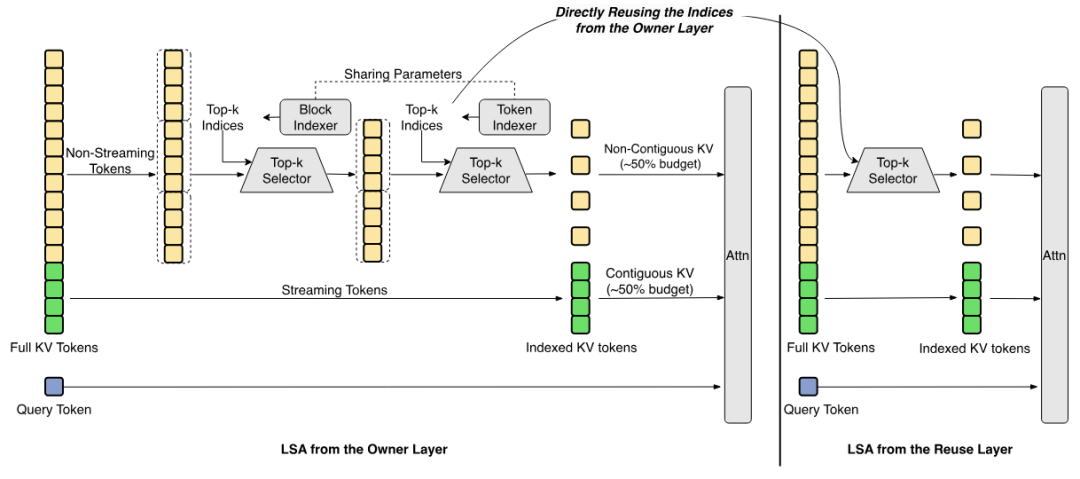
- Key architectural innovations include LongCat sparse attention and N-gram Embedding to optimize long-context efficiency.
- The release includes synchronized inference code support for domestic GPU hardware to facilitate local ecosystem growth.
In-Depth Analysis
Architectural Breakthroughs: Sparse Attention and N-gram Embedding
Meituan's LongCat-2.0 introduces significant architectural shifts designed to handle the inherent complexities of modern software development. The model utilizes a massive scale of 1.6 trillion parameters, yet it maintains operational efficiency by activating only approximately 48 billion parameters on average. A core component of this efficiency is the "LongCat sparse attention" mechanism. This innovation is specifically engineered to address the challenges of long-context processing, which is essential for coding tasks where models must reference large codebases, cross-file dependencies, or extensive technical documentation. By utilizing sparse attention, the model can process vast amounts of information without the prohibitive computational costs typically associated with standard dense attention mechanisms.
Furthermore, the inclusion of N-gram Embedding significantly enhances the model's token-level representation. In programming languages, where syntax, specific character sequences, and repetitive patterns carry heavy semantic weight, N-gram Embedding allows LongCat-2.0 to capture more nuanced relationships between tokens. This leads to a more precise understanding of code structures and logic, providing a stronger foundation for complex reasoning and subsequent code generation.
Optimized for Agentic Coding via Dynamic Activation
LongCat-2.0 is described as being "born for real Agentic Coding tasks." This indicates a focus that extends beyond simple code completion, moving toward autonomous or semi-autonomous coding agents capable of understanding high-level requirements and executing functional solutions. To achieve this, Meituan has implemented dynamic activation within the model's architecture. This technique, when combined with the model's sparse structure, allows for a more flexible and powerful approach to the three pillars of AI coding: understanding, generation, and execution.
The dynamic activation mechanism ensures that the model can focus its computational resources on the most relevant parameters for a specific task. This is particularly beneficial for "execution" performance, a key metric for agentic models that must not only write code but also ensure it functions correctly within a given environment. By strengthening the link between conceptual understanding and practical execution, LongCat-2.0 aims to provide a more reliable and robust tool for developers working on multi-step, complex coding projects.
Empowering the Domestic Hardware Ecosystem
A significant aspect of this open-source release is the inclusion of inference code specifically designed for domestic GPU cards. As the global AI industry seeks to optimize performance across diverse hardware platforms, providing optimized code for local hardware is a strategic move. This ensures that developers and enterprises utilizing domestic infrastructure can leverage the full power of a 1.6T parameter model without facing the significant performance degradation or compatibility hurdles often found in generic implementations. The synchronization of the model release with dedicated domestic hardware support underscores Meituan's commitment to building a high-performance and accessible AI ecosystem that is not limited by hardware constraints.
Industry Impact
The release of LongCat-2.0 marks a significant milestone in the field of AI-assisted software engineering. By open-sourcing a model of this scale with a specific focus on Agentic Coding, Meituan is providing the global community with a powerful framework for building more sophisticated coding assistants. The emphasis on long-context efficiency and domestic hardware compatibility addresses two of the most pressing needs in the current AI landscape: the ability to handle large-scale project data and the requirement for hardware-optimized deployment options. This move is likely to accelerate the development of autonomous coding agents and strengthen the technical capabilities of the domestic AI hardware ecosystem.
Frequently Asked Questions
Question: What are the parameter specifications for LongCat-2.0?
LongCat-2.0 features a total of 1.6 trillion parameters. However, it uses an efficient architecture that results in an average of approximately 48 billion active parameters during inference.
Question: How does LongCat-2.0 improve code understanding and execution?
The model utilizes LongCat sparse attention for efficient long-context processing and N-gram Embedding for superior token representation. Additionally, it employs dynamic activation to specifically enhance its performance in understanding, generating, and executing code for agentic tasks.
Question: Does this release support specific hardware platforms?
Yes, Meituan has specifically released inference code optimized for domestic GPU cards alongside the model, ensuring that the model can be efficiently deployed on local hardware infrastructure.