Meituan Open-Sources LongCat-2.0: A 1.6T Parameter Model Redefining Agentic Coding and Domestic Hardware Inference
Meituan's technical team has officially announced the open-sourcing of LongCat-2.0, a massive large language model featuring 1.6 trillion total parameters. Designed specifically for real-world Agentic Coding tasks, the model utilizes a sparse architecture where approximately 48 billion parameters are activated on average. LongCat-2.0 introduces several architectural innovations, including LongCat Sparse Attention and N-gram Embedding, which aim to optimize long-context processing and token-level representation. Additionally, the model incorporates dynamic activation to enhance its capabilities in code understanding, generation, and execution. A key highlight of this release is the inclusion of inference code specifically optimized for domestic hardware, facilitating broader deployment and accessibility within the local technological ecosystem.
Key Takeaways
- Massive Scale with Efficiency: LongCat-2.0 features a total of 1.6 trillion parameters, but maintains computational efficiency by activating only about 48 billion parameters on average.
- Specialized for Agentic Coding: The model is purpose-built to handle complex, real-world Agentic Coding tasks, moving beyond simple code completion to deeper understanding and execution.
- Architectural Innovations: It introduces LongCat Sparse Attention and N-gram Embedding to significantly improve long-context handling and token-level representation.
- Domestic Hardware Support: Meituan has released specialized inference code to ensure the model runs efficiently on domestic (Chinese) computing hardware.
- Enhanced Performance: Through dynamic activation, the model achieves superior results in code understanding, generation, and execution workflows.
In-Depth Analysis
Architectural Innovations: Sparse Attention and N-gram Embedding
Meituan's LongCat-2.0 represents a significant leap in model architecture, specifically tailored for the demanding requirements of software development. At the core of its design are two primary innovations: LongCat Sparse Attention and N-gram Embedding.
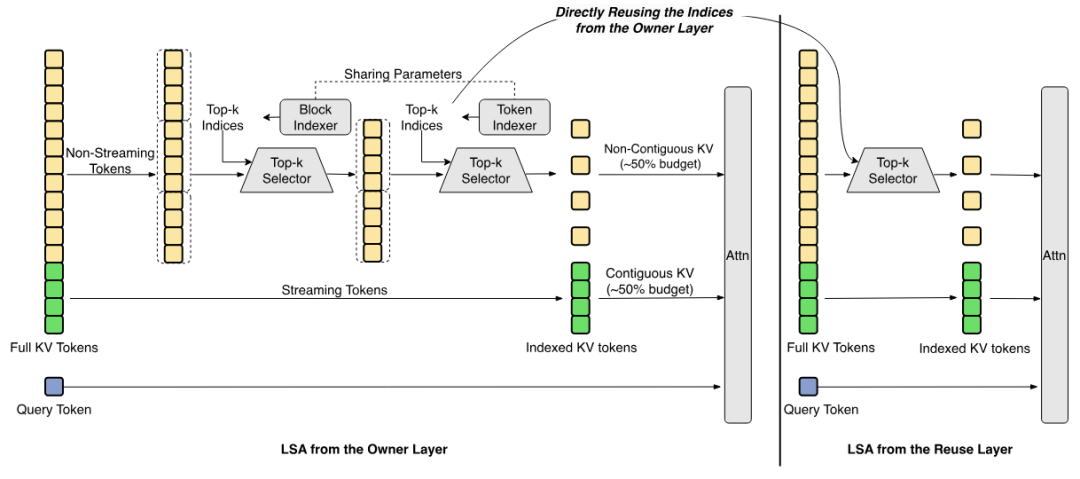
The introduction of LongCat Sparse Attention addresses one of the most persistent challenges in large language models: the computational overhead associated with long-context windows. In coding tasks, where developers often need the model to understand entire repositories or extensive documentation, the ability to process long sequences efficiently is critical. By utilizing a sparse attention mechanism, LongCat-2.0 can focus on relevant segments of the input, reducing the quadratic complexity typically associated with standard attention layers. This allows for faster processing and lower memory consumption without sacrificing the model's ability to maintain global context.
Complementing this is the N-gram Embedding layer. Traditional models often struggle with the granular nuances of programming languages at the token level. By incorporating N-gram embeddings, LongCat-2.0 enhances its token-level representation capabilities. This allows the model to capture local patterns and structural dependencies within the code more effectively, leading to more accurate code generation and a more profound understanding of syntax and logic. Together, these features ensure that the model is not just processing text, but is deeply cognizant of the structural intricacies of code.
Scaling for Agentic Coding: The 1.6T Parameter Frontier
LongCat-2.0 enters the elite tier of models with its 1.6 trillion total parameters. However, the model's true strength lies in its sparse activation strategy. By activating an average of 48 billion parameters during inference, Meituan has balanced the immense knowledge capacity of a trillion-parameter model with the practical performance of a much smaller one. This approach is particularly effective for Agentic Coding.
Agentic Coding refers to a paradigm where the AI acts as an autonomous or semi-autonomous agent capable of not just writing snippets of code, but also understanding the broader objectives, executing tasks, and iterating based on results. The 1.6T parameter backbone provides the vast "world knowledge" and logic required for such complex reasoning, while the dynamic activation ensures that the model remains responsive and efficient during the iterative cycles of code execution and debugging. This specialized focus suggests that LongCat-2.0 is designed to be integrated into sophisticated developer tools that require high-level reasoning and execution capabilities rather than just simple autocomplete functions.
Bridging the Hardware Gap: Domestic Card Inference
A pivotal aspect of the LongCat-2.0 release is the synchronization of domestic hardware inference code. In the current global landscape, the ability to deploy high-performance AI models on local hardware is of strategic importance. By providing optimized code for domestic chips (referred to as "domestic cards"), Meituan is lowering the barrier to entry for local enterprises and developers who may not have access to international high-end GPU clusters.
This move ensures that the performance gains achieved through LongCat Sparse Attention and dynamic activation are actually realizable on the hardware available within the domestic ecosystem. It signifies a commitment to building a self-sustaining AI development environment where software innovations are tightly coupled with hardware realities. This optimization likely includes specific kernels and memory management techniques tailored to the architecture of domestic accelerators, ensuring that the 1.6T parameter model can be served with acceptable latency and throughput.
Industry Impact
The release of LongCat-2.0 is poised to influence the AI and software development industries in several ways. Firstly, it sets a new benchmark for open-source coding models, particularly those utilizing sparse architectures to manage massive parameter counts. By focusing on "Agentic Coding," Meituan is pushing the industry toward more autonomous AI assistants that can handle end-to-end development tasks.
Secondly, the emphasis on domestic hardware compatibility is a significant step toward technological self-reliance. It encourages the adoption of local hardware by providing a top-tier model that is ready to run out of the box. This could accelerate the development of a localized AI ecosystem where software and hardware are optimized in tandem.
Finally, the architectural improvements in long-context processing and token representation provide a blueprint for other researchers looking to optimize LLMs for specialized technical domains. The combination of sparse attention and N-gram embeddings offers a viable path for creating models that are both highly capable and computationally feasible for large-scale industrial use.
Frequently Asked Questions
Question: What makes LongCat-2.0 different from standard coding models?
LongCat-2.0 is specifically designed for "Agentic Coding," meaning it is optimized for tasks that involve understanding, generating, and executing code as an agent. It uses a massive 1.6T parameter base with a sparse activation of 48B parameters, alongside unique innovations like LongCat Sparse Attention and N-gram Embedding to handle long contexts and fine-grained code structures more effectively than general-purpose models.
Question: Why is the support for domestic hardware significant?
Support for domestic hardware (domestic cards) ensures that the model can be deployed efficiently on locally produced chips. This reduces dependency on specific international hardware providers and allows local developers and companies to utilize state-of-the-art AI capabilities using the infrastructure available to them, fostering a more robust local AI ecosystem.
Question: How does the model achieve efficiency despite having 1.6 trillion parameters?
Efficiency is achieved through a sparse architecture and dynamic activation. While the model has a total capacity of 1.6T parameters, it only activates approximately 48B parameters on average during any given task. This allows the model to leverage a vast amount of learned information while keeping the computational cost and inference time manageable.