Meituan Open Sources AIGC Poster Generation System: A Deep Dive into the Generation-Editing-Evaluation Closed Loop
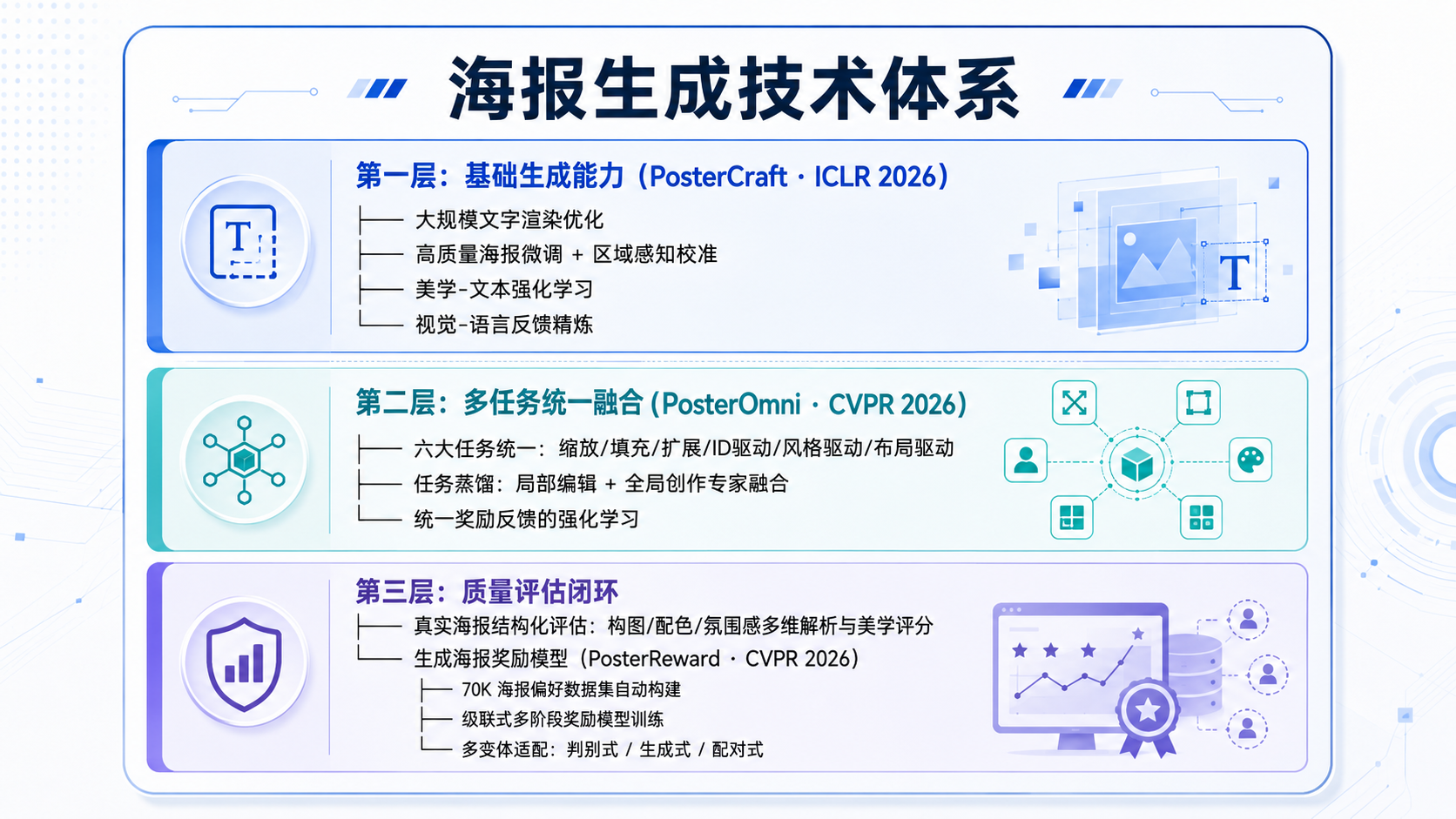
Meituan's Intelligent Creation Team has officially announced the development and open-sourcing of a comprehensive AIGC technical system for poster generation. This innovative framework is built around a unique "Generation-Editing-Evaluation" technical closed loop, designed to streamline the creative process from initial conception to final quality assessment. Currently deployed across Meituan Waimai (food delivery) and various Brand IP scenarios, the system demonstrates the practical application of AI in high-volume commercial design. By making the entire system open-source, Meituan aims to contribute to the broader AI community, providing a robust architecture for automated visual content creation. This move marks a significant step in integrating generative AI into real-world business workflows while fostering collaborative development in the AIGC space.
Key Takeaways
- Technical Closed Loop: Meituan has established a "Generation-Editing-Evaluation" framework that covers the entire lifecycle of poster creation.
- Real-World Application: The technology is already operational within Meituan Waimai and Brand IP scenarios, proving its commercial viability.
- Open Source Commitment: Meituan has fully open-sourced the technical system, allowing external developers to utilize and build upon their AIGC innovations.
- Intelligent Creation: The system was developed by Meituan's Intelligent Creation Team, focusing on specialized AIGC solutions for the platform's ecosystem.
In-Depth Analysis
The Generation-Editing-Evaluation Framework
At the core of Meituan's AIGC innovation is the "Generation-Editing-Evaluation" technical closed loop. This structured approach addresses the common challenges found in automated design. The "Generation" phase focuses on the initial creation of visual assets based on specific inputs or parameters. However, automated generation often requires refinement, leading to the "Editing" phase. This component allows for precise adjustments, ensuring that the generated posters meet specific brand guidelines or layout requirements.
Finally, the "Evaluation" phase completes the loop. By implementing a systematic way to judge the quality and effectiveness of the generated posters, Meituan ensures that only high-quality outputs reach the end-user. This closed-loop system reduces the need for manual intervention and creates a self-sustaining workflow for large-scale visual content production. The integration of these three stages suggests a highly sophisticated pipeline that prioritizes both creative flexibility and quality control.
Practical Deployment in Meituan Waimai and Brand IP
The practical utility of this AIGC system is evidenced by its deployment in Meituan Waimai and Brand IP scenarios. In the context of food delivery (Waimai), the demand for diverse and localized visual content is immense. Merchants and the platform require constant updates to promotional materials to maintain user engagement. Meituan's AIGC system allows for the rapid generation of these posters, significantly lowering the cost and time associated with traditional design processes.
Furthermore, the application in Brand IP scenarios indicates the system's ability to handle complex brand elements and maintain visual consistency. Brand IP requires a high degree of fidelity to established characters and aesthetics. The fact that Meituan's system can successfully navigate these requirements suggests that their "Generation-Editing-Evaluation" loop is capable of adhering to strict stylistic constraints while still benefiting from the efficiency of artificial intelligence.
Industry Impact
Meituan's decision to open-source this AIGC poster generation system is a significant contribution to the industry. While many tech giants keep their generative AI tools behind proprietary walls, Meituan's move encourages transparency and collective improvement. This open-source approach allows smaller developers and other enterprises to adopt a proven "Generation-Editing-Evaluation" model without having to build the infrastructure from scratch.
Moreover, this development highlights the shift from general-purpose AI to specialized, task-oriented AIGC systems. By focusing specifically on poster generation for e-commerce and delivery platforms, Meituan provides a blueprint for how AI can be tailored to solve specific industry pain points. This sets a precedent for other platforms to integrate AI not just as a novelty, but as a core component of their operational efficiency and creative strategy.
Frequently Asked Questions
Question: What is the "Generation-Editing-Evaluation" loop in Meituan's system?
It is a technical framework where the system first generates a poster, provides tools for editing or refining that generation, and finally evaluates the output against quality standards to ensure it is fit for use.
Question: Where is Meituan currently using this AIGC technology?
The technology is currently implemented in Meituan Waimai (food delivery) services and for various Brand IP creative scenarios to generate promotional posters.
Question: Is Meituan's poster generation technology available to the public?
Yes, Meituan has announced that the technical system is fully open-sourced, making it available for the developer community to study, use, and improve.