Meituan LongCat Team Unveils WBench: The First Systematic Multi-Round Benchmark for Interactive Video World Models
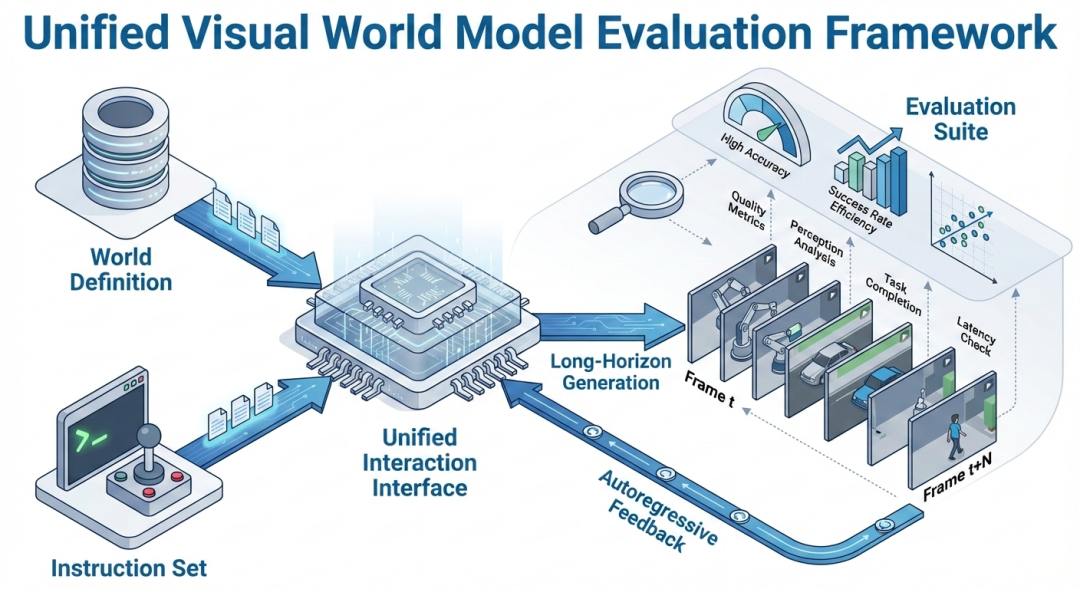
The Meituan LongCat team has officially introduced and open-sourced WBench, a pioneering evaluation framework designed to measure the capabilities of interactive video world models. As the first systematic multi-round benchmark of its kind, WBench functions as a diagnostic "CT scanner," allowing researchers to identify the precise technical limitations encountered when AI transitions from passive observation to active interaction. By testing models across diverse scenarios—ranging from lunar environments to complex cybernetic cities—WBench provides a rigorous methodology for assessing how world models maintain consistency and logic during interactive sequences. This open-source tool aims to bridge the gap between current AI capabilities and the requirements for truly interactive simulated environments, offering a structured approach to identifying performance bottlenecks.
Key Takeaways
- Meituan's LongCat team has developed and open-sourced WBench, the industry's first systematic multi-round evaluation benchmark for interactive video world models.
- The benchmark is designed to act as a "CT scanner," providing a detailed diagnostic view of where world models fail during the transition from passive viewing to active interaction.
- WBench evaluates model performance across a wide spectrum of environments, from the physics-defying moonwalk to complex, high-density cybernetic urban settings.
- By focusing on multi-round interaction, the benchmark addresses a critical gap in current AI evaluation methodologies which often rely on static or single-step assessments.
In-Depth Analysis
Bridging the Gap Between Observation and Interaction
The development of WBench by the Meituan LongCat team represents a pivotal shift in how the AI community evaluates world models. Historically, many models have been judged on their ability to generate visually coherent videos from a "passive" perspective—essentially acting as sophisticated video generators. However, the true potential of a world model lies in its ability to facilitate "active interaction." WBench is specifically engineered to measure this transition. By moving beyond simple observation, the benchmark tests whether a model can maintain a consistent internal logic when subjected to user-driven changes or multi-step interactive sequences. This is a fundamental requirement for AI systems intended for use in robotics, simulation, and complex decision-making environments.
The "CT Scanner" Methodology for AI Diagnostics
One of the most significant contributions of WBench is its diagnostic approach, which the Meituan team likens to a "CT scanner." In the context of AI development, identifying that a model has failed is often easier than identifying why or where it has failed. WBench provides the systematic framework necessary to pinpoint these specific "bottlenecks." Whether a model loses temporal coherence after the third round of interaction or fails to render the physical consequences of an action in a specific environment like a "cyber city," WBench offers the granularity needed for developers to see the internal "fractures" in the model's understanding of the world. This level of detail is essential for iterative improvement, moving the industry away from trial-and-error development toward a more precise, diagnostic-driven engineering process.
Measuring Boundaries from Moonwalks to Cyber Cities
The scope of WBench is highlighted by its ability to measure the boundaries of world models across vastly different scenarios. The mention of "moonwalks" suggests an evaluation of a model's grasp of non-standard physics and low-gravity environments, while "cyber cities" imply a test of high-complexity visual data, navigation, and dense interactive elements. By covering such a broad range of contexts, WBench ensures that world models are not just specialized for one type of data but are instead developing a generalized capability to simulate and interact with diverse realities. This systematic multi-round evaluation ensures that the model's performance is robust across time and varying environmental constraints.
Industry Impact
The introduction of WBench is likely to have a profound impact on the AI research landscape, particularly concerning the standardization of world model assessments. By open-sourcing the benchmark, Meituan is providing a common language and set of metrics for researchers worldwide. This transparency allows for more accurate comparisons between different models and fosters a collaborative environment where the "boundaries" of world models can be pushed collectively. Furthermore, as the industry moves toward more interactive AI applications, having a dedicated tool to measure the effectiveness of these interactions will accelerate the deployment of world models in practical, real-world scenarios such as autonomous driving simulations and interactive digital twins.
Frequently Asked Questions
Question: What is the primary purpose of the WBench benchmark?
WBench is designed to be a systematic, multi-round evaluation tool for interactive video world models. Its primary goal is to diagnose the specific technical challenges models face when moving from passive video generation to active, multi-step interaction.
Question: Why does the Meituan team refer to WBench as a "CT scanner"?
The "CT scanner" analogy refers to the benchmark's ability to provide a deep, diagnostic look into the performance of a world model. It allows researchers to precisely locate where a model's logic or consistency breaks down during an interactive process, rather than just providing a pass/fail score.
Question: Is WBench available for other researchers to use?
Yes, the Meituan LongCat team has open-sourced WBench, making it available for the global AI research community to evaluate and improve their own interactive world models.