LongCat Unveils VitaBench 2.0: The First Benchmark for Long-Term Dynamic User Modeling in Real-Life Scenarios
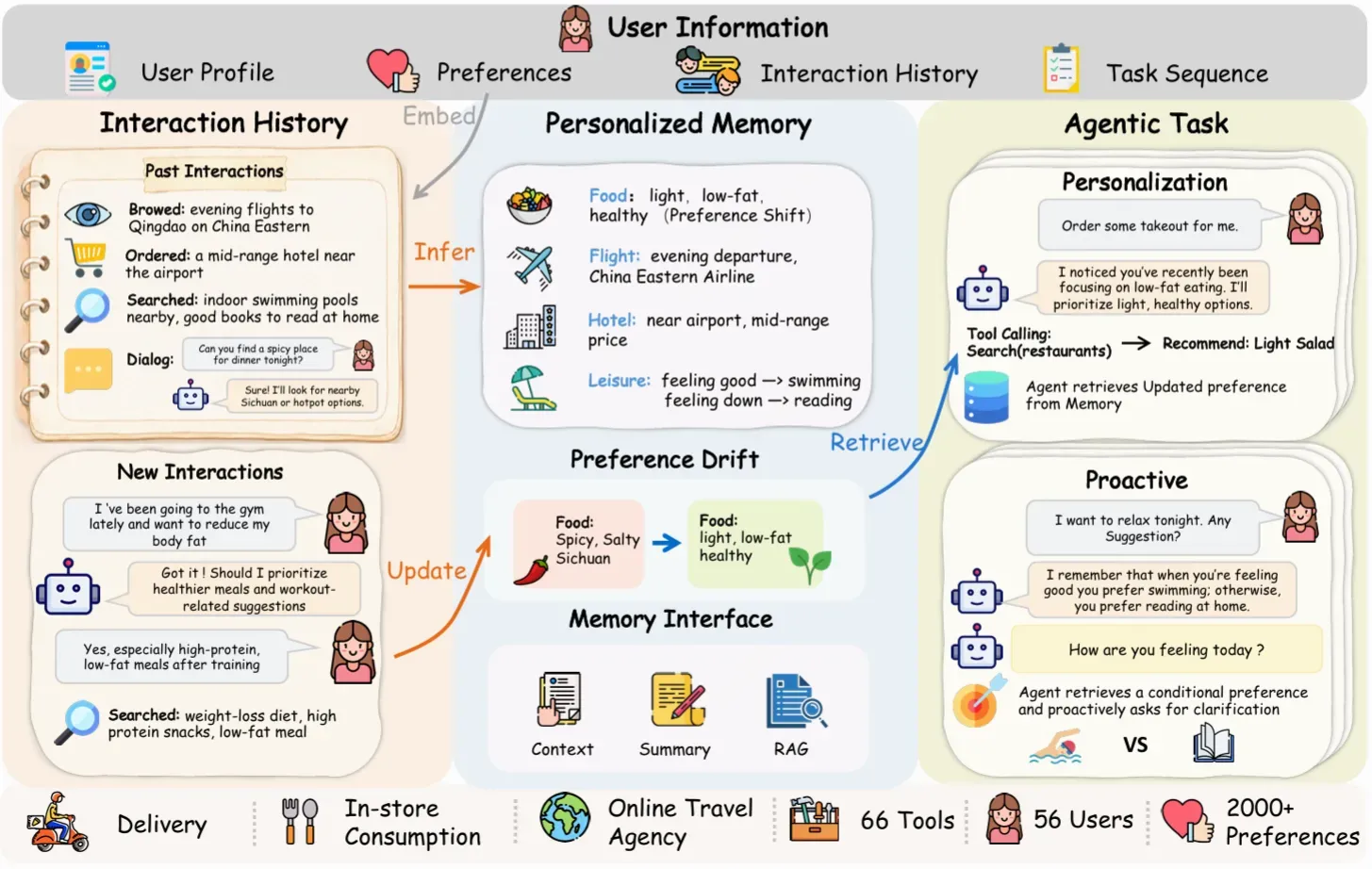
LongCat, the technical team from Meituan, has officially released VitaBench 2.0, a groundbreaking evaluation benchmark designed to address the complexities of long-term dynamic user modeling. As the first benchmark of its kind to focus on authentic, real-life scenarios, VitaBench 2.0 provides a systematic framework for assessing Large Language Model (LLM) agents. The benchmark specifically targets two critical dimensions of agent performance: personalization and proactivity. By simulating extended and evolving user interactions, VitaBench 2.0 aims to set a new standard for how AI agents are evaluated in their ability to maintain relevance and initiative over time. This release represents a significant advancement in the field of AI evaluation, moving beyond static testing toward more human-centric, long-term engagement metrics.
Key Takeaways
- Pioneering Benchmark: VitaBench 2.0 is identified as the first evaluation benchmark specifically designed for long-term dynamic user modeling within real-life contexts.
- Focus on LLM Agents: The system is built to systematically evaluate the performance of Large Language Model (LLM) agents during sustained interactions.
- Core Evaluation Metrics: The benchmark prioritizes the assessment of an agent's personalization capabilities and its level of proactivity.
- Real-World Simulation: Unlike traditional static benchmarks, VitaBench 2.0 emphasizes real, dynamic, and long-term user-agent engagement scenarios.
In-Depth Analysis
Redefining Evaluation through Long-Term Dynamic Modeling
The introduction of VitaBench 2.0 by the LongCat technical team marks a pivotal shift in the evaluation landscape for artificial intelligence. Traditional benchmarks often focus on isolated tasks or short-term interactions, which fail to capture the complexity of how AI agents function in the real world over extended periods. VitaBench 2.0 addresses this gap by focusing on "long-term dynamic user modeling." This approach recognizes that user needs, preferences, and contexts are not static; they evolve as interactions progress. By creating a framework that accounts for these dynamics, VitaBench 2.0 allows developers to measure how well an LLM agent can maintain a coherent and evolving understanding of a user over time. This is essential for applications where the AI is expected to act as a persistent assistant or companion, requiring it to remember past interactions and adapt to new information without losing the thread of the user's unique profile.
The Pillars of Modern Agents: Personalization and Proactivity
At the heart of VitaBench 2.0 are two specific metrics that define the next generation of AI agents: personalization and proactivity. Personalization, in the context of this benchmark, refers to the agent's ability to tailor its responses and actions based on the long-term history and specific characteristics of the user. In real-life scenarios, a one-size-fits-all response is often inadequate; VitaBench 2.0 tests whether an agent can leverage dynamic user modeling to provide highly relevant, individualized experiences.
Complementing personalization is the metric of proactivity. Most current LLM interactions are reactive, meaning the AI only responds when prompted. However, for an agent to be truly effective in a real-life setting, it must demonstrate the ability to take initiative. VitaBench 2.0 systematically evaluates whether an agent can anticipate user needs or suggest actions based on the ongoing, dynamic context of the interaction. By measuring these two traits in tandem, the benchmark provides a comprehensive view of an agent's utility in complex, authentic environments where simply following instructions is not enough to provide a high-quality user experience.
Industry Impact
The release of VitaBench 2.0 is poised to have a significant influence on the AI industry, particularly in the development of consumer-facing agents. By providing a standardized way to measure long-term interaction quality, it encourages developers to move beyond optimizing for immediate accuracy and toward optimizing for long-term user retention and satisfaction.
Furthermore, the focus on "real-life scenarios" pushes the industry to move away from synthetic or laboratory-style datasets. As AI agents are increasingly integrated into daily life—from personal assistants to professional coordinators—the industry requires benchmarks that reflect the messy, unpredictable, and evolving nature of human reality. VitaBench 2.0 provides the necessary infrastructure to validate these agents before they are deployed in high-stakes or high-touch environments. This could lead to a new wave of AI development where the "intelligence" of a model is judged not just by its knowledge base, but by its ability to build and maintain a sophisticated, proactive relationship with its users over time.
Frequently Asked Questions
Question: What makes VitaBench 2.0 different from other AI benchmarks?
VitaBench 2.0 is unique because it is the first benchmark to focus specifically on long-term dynamic user modeling in real-life scenarios. While other benchmarks might test logic or short-term memory, VitaBench 2.0 evaluates how agents handle evolving user interactions over an extended period, focusing on personalization and proactivity.
Question: Who developed VitaBench 2.0 and what is its primary goal?
VitaBench 2.0 was developed by the LongCat technical team (Meituan). Its primary goal is to provide a systematic way to evaluate the ability of LLM agents to engage in personalized and proactive interactions within authentic, dynamic user environments.
Question: Why are personalization and proactivity emphasized in this benchmark?
These two traits are essential for creating AI agents that feel helpful and human-like in real-world settings. Personalization ensures the agent understands the specific user, while proactivity ensures the agent can take initiative to assist the user, both of which are critical for long-term engagement and utility.