Meituan Open Sources AIGC Poster Generation Framework Featuring Generation-Editing-Evaluation Loop
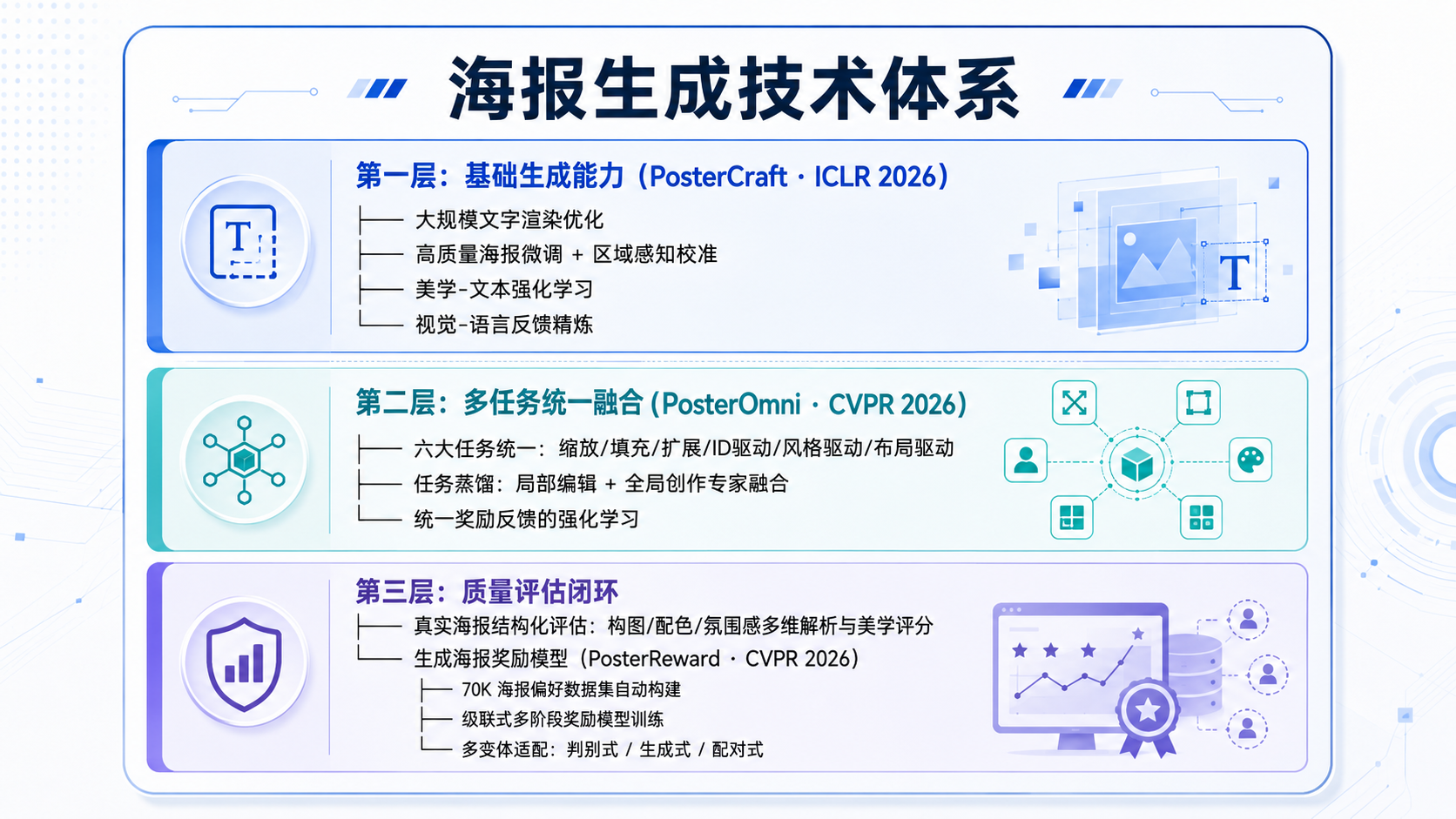
Meituan's Intelligent Creation Team has announced the development and open-sourcing of a comprehensive technical system for AIGC-driven poster generation. The framework is built upon a unique "Generation-Editing-Evaluation" technical closed loop, designed to streamline the creation of visual content. This system has already seen successful implementation within Meituan's core business sectors, specifically in Meituan Waimai (food delivery) and various brand IP scenarios. By open-sourcing the entire technical architecture, Meituan aims to contribute to the broader AI community and advance the practical application of generative AI in commercial design. The initiative highlights a shift toward integrated AI pipelines that handle not just the creation, but also the refinement and quality assessment of digital assets.
Key Takeaways
- Comprehensive AIGC System: Meituan has developed a full-stack technical framework specifically for automated poster generation.
- Technical Closed Loop: The system operates on a "Generation-Editing-Evaluation" model, ensuring a complete workflow from initial creation to final quality check.
- Real-World Application: The technology is already deployed in high-traffic scenarios, including Meituan Waimai and brand IP development.
- Open Source Commitment: Meituan has made the entire technical system available to the public, fostering innovation in the open-source AI community.
In-Depth Analysis
The "Generation-Editing-Evaluation" Technical Closed Loop
At the core of Meituan's AIGC innovation is the "Generation-Editing-Evaluation" technical closed loop. This structure represents a significant evolution in how generative AI is applied to commercial design. Unlike traditional one-off generation models, Meituan’s approach recognizes that the first output of an AI model often requires refinement and objective assessment before it is ready for commercial use.
- Generation: This initial phase focuses on the core AIGC capabilities, where the system interprets design requirements to produce a base poster. This involves complex layout planning and visual element synthesis.
- Editing: Recognizing that automated generation may not always meet specific brand guidelines or aesthetic nuances, the editing component allows for precise adjustments. This stage ensures that the generated content remains flexible and customizable for different marketing needs.
- Evaluation: The final piece of the loop is a critical evaluation mechanism. This stage assesses the generated and edited posters against predefined quality standards. By incorporating an evaluation layer, Meituan ensures that only high-quality, relevant visual content reaches the end-user, effectively creating a self-correcting system that maintains brand integrity.
Strategic Implementation in Meituan Waimai and Brand IP
The practical application of this AIGC system in Meituan Waimai and Brand IP scenarios demonstrates its commercial viability. In the food delivery sector (Waimai), the demand for high-volume, localized, and time-sensitive visual content is immense. Merchants and the platform itself require constant updates to promotional materials, which can be a bottleneck for human designers.
By deploying the AIGC poster generation system, Meituan can automate the production of promotional banners and posters at scale. Furthermore, in the context of Brand IP, the system helps maintain visual consistency across various marketing channels. The ability to generate content that adheres to specific IP characteristics while allowing for rapid iteration is a key advantage in a competitive digital marketplace. The transition from manual design to an AI-assisted closed loop allows for a significant increase in production efficiency without sacrificing the quality of the brand's visual identity.
Industry Impact
The decision by Meituan's Intelligent Creation Team to open-source this system is a significant move for the AI industry. It provides developers and enterprises with a blueprint for building production-ready AIGC tools. By sharing a system that has already been battle-tested in high-concurrency environments like Meituan Waimai, Meituan is lowering the barrier to entry for other companies looking to integrate generative AI into their workflows.
Moreover, the focus on a "closed loop" rather than just a "generator" sets a new standard for industrial AI applications. It emphasizes that for AI to be truly useful in a professional setting, it must include mechanisms for editing and quality control. This open-source contribution is likely to accelerate the development of similar frameworks across the industry, leading to more robust and reliable automated design tools.
Frequently Asked Questions
Question: What makes Meituan's AIGC poster system different from standard image generators?
Unlike standard generators that produce a single output, Meituan's system incorporates an "Editing" and "Evaluation" phase. This creates a closed loop that allows for the refinement of images and ensures they meet specific quality and brand standards before deployment.
Question: In which specific areas of Meituan's business is this technology used?
The system is currently implemented in Meituan Waimai (food delivery) and for Brand IP scenarios, where it helps generate high volumes of marketing and promotional visual content.
Question: Is the code for this AIGC system available to the public?
Yes, Meituan has officially open-sourced the complete technical system, allowing the developer community to access, study, and build upon their AIGC poster generation framework.