Meituan Unveils and Open Sources Advanced AIGC Poster Generation Framework Featuring a Complete Technical Closed Loop
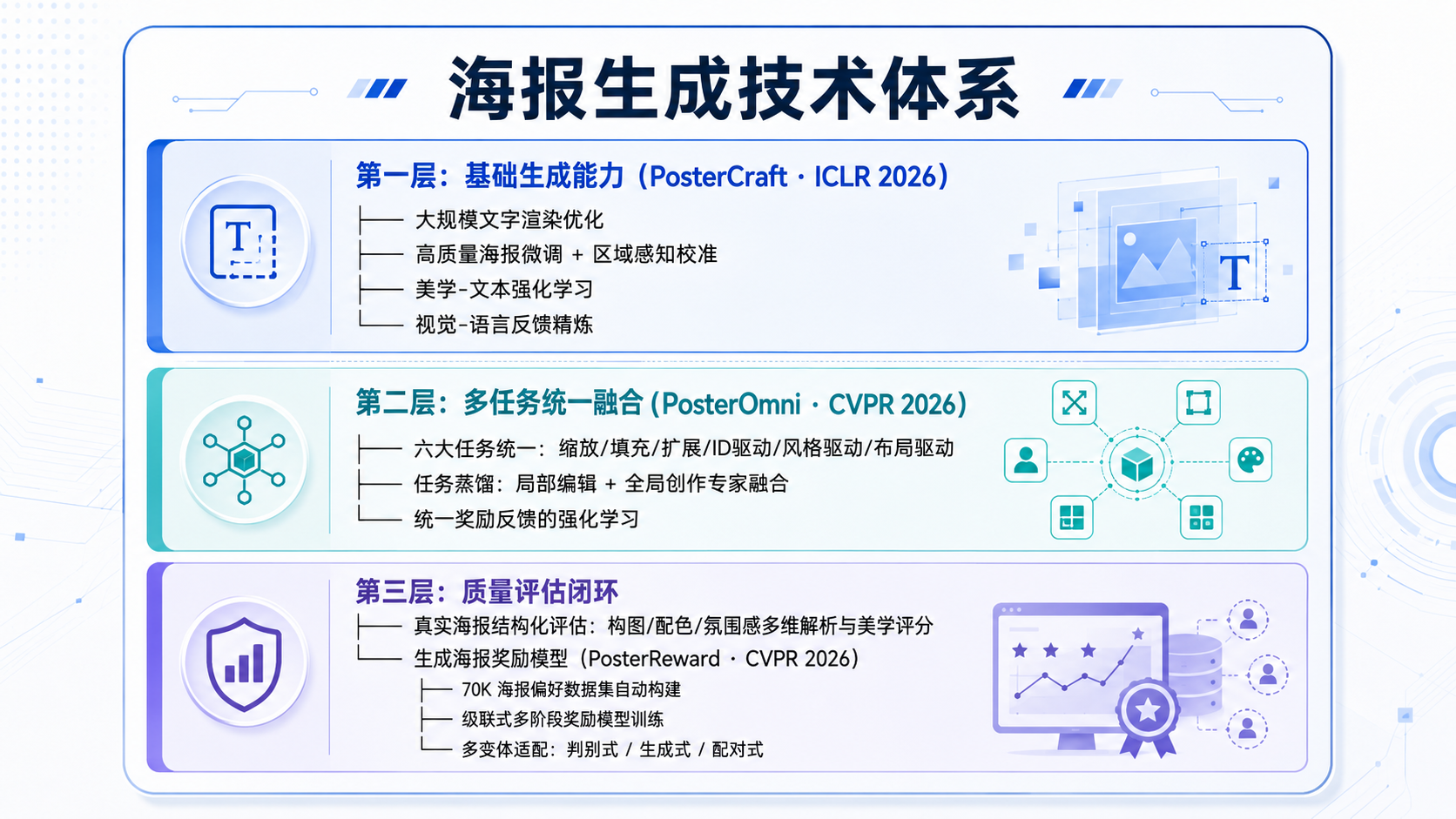
Meituan's intelligent creation team has developed a comprehensive technical system for AIGC-driven poster generation, focusing on a "Generation-Editing-Evaluation" closed loop. This innovation addresses the high-demand visual needs of Meituan Waimai and brand IP management. By integrating these three core phases, the system ensures that AI-generated content is not only creative but also editable and subject to quality control. Following successful internal implementation, Meituan has made the entire system open-source, marking a significant contribution to the AIGC community and providing a blueprint for industrial-scale automated design. The move highlights Meituan's commitment to enhancing marketing efficiency through artificial intelligence while fostering an open-source ecosystem for technical advancement.
Key Takeaways
- Comprehensive Technical System: Meituan has established a full-stack AIGC framework specifically designed for poster generation.
- Closed-Loop Architecture: The system operates on a "Generation-Editing-Evaluation" cycle, ensuring a seamless transition from creation to quality assurance.
- Targeted Application Scenarios: The technology is currently deployed in high-volume environments, including Meituan Waimai (food delivery) and brand IP development.
- Open Source Commitment: Meituan has fully open-sourced the technical system, allowing the broader developer community to access and build upon their AIGC innovations.
In-Depth Analysis
The "Generation-Editing-Evaluation" Technical Closed Loop
At the core of Meituan's AIGC innovation is the establishment of a robust technical closed loop. This framework is divided into three critical stages: Generation, Editing, and Evaluation. By structuring the workflow this way, Meituan addresses the common pitfalls of AI-generated content, such as lack of precision and difficulty in post-generation refinement.
In the Generation phase, the system focuses on the initial creation of visual assets based on specific prompts or data inputs. However, recognizing that raw AI outputs often require human-like adjustments, the Editing component provides the necessary tools to modify and fine-tune the generated posters. This ensures that the final product aligns with specific marketing goals or aesthetic requirements. Finally, the Evaluation stage acts as a quality gate, using automated or semi-automated metrics to judge the effectiveness, brand consistency, and visual appeal of the poster. This closed loop ensures that the system is not just a creative tool but a production-ready industrial solution.
Strategic Implementation in Waimai and Brand IP
Meituan's decision to implement this technology within the Waimai and brand IP sectors is a strategic response to the massive demand for visual content in local services. In the food delivery sector (Waimai), merchants and the platform itself require a constant stream of promotional posters to drive consumer engagement. Traditional design processes are often too slow or costly to meet this volume. By utilizing AIGC, Meituan can automate the production of high-quality, contextually relevant posters at scale.
Furthermore, the application in Brand IP scenarios suggests that the system is capable of maintaining high levels of visual consistency. Brand assets require strict adherence to style guides and character integrity. The fact that Meituan's AIGC system can handle these sensitive tasks indicates a high level of control within their "Generation-Editing-Evaluation" framework, allowing for the creation of complex brand-related imagery that remains true to the company's identity.
Industry Impact
Democratizing AI Design through Open Source
By open-sourcing this entire technical system, Meituan is making a significant contribution to the global AI community. Many organizations struggle to move AIGC from a experimental phase to a practical, closed-loop production environment. Meituan’s model provides a proven architecture that other developers can adapt for their own specific industries. This move likely accelerates the adoption of AI-driven design tools across the tech sector, reducing the barrier to entry for smaller companies that lack the resources to build such complex systems from scratch.
Setting a Standard for Industrial AIGC
The focus on "Evaluation" within the technical loop sets a new standard for how industrial AIGC should be approached. In a commercial setting, the ability to judge and filter AI output is just as important as the ability to generate it. Meituan’s approach emphasizes that for AI to be truly useful in a business context, it must be part of a controlled, evaluative ecosystem. This shift from "creative exploration" to "structured production" is a key milestone in the maturation of AIGC technologies within the enterprise space.
Frequently Asked Questions
Question: What makes Meituan's AIGC poster system different from standard image generators?
Unlike standalone image generators, Meituan's system is a "closed loop" that includes dedicated modules for editing and evaluation. This means it is designed for a professional production workflow where the quality and brand alignment of the output must be guaranteed and adjustable.
Question: In which specific areas of Meituan's business is this technology used?
The technology is currently implemented in Meituan Waimai (food delivery) for merchant and platform marketing, as well as in scenarios involving brand IP, where visual consistency and character accuracy are paramount.
Question: Is the code for this system available to the public?
Yes, Meituan has fully open-sourced the technical system, making it available for developers and researchers to study, use, and improve upon.