Meituan Officially Open-Sources LongCat-2.0: A 1.6T Parameter Model Revolutionizing Agentic Coding and Domestic Hardware Inference
Meituan's technical team has announced the open-source release of LongCat-2.0, a high-performance model boasting 1.6 trillion total parameters and approximately 48 billion average active parameters. Designed specifically for "Agentic Coding" tasks, the model incorporates innovative architectural elements including LongCat Sparse Attention and N-gram Embedding. These features are engineered to improve long-context processing efficiency and token-level representation. By combining these with dynamic activation, LongCat-2.0 achieves superior performance in code understanding, generation, and execution. Crucially, the release includes inference code compatible with domestic AI hardware, facilitating broader adoption and optimization within the local technological ecosystem. This release marks a significant milestone in providing open-source tools for complex software engineering automation and long-context code analysis.
Key Takeaways
- Massive Scale with Efficiency: LongCat-2.0 features 1.6 trillion total parameters, utilizing a dynamic activation strategy that results in an average of 48 billion active parameters per task.
- Architectural Innovations: The model introduces LongCat Sparse Attention and N-gram Embedding to significantly enhance long-context processing and token-level representation.
- Purpose-Built for Coding: Specifically designed for "Agentic Coding," the model focuses on the full lifecycle of code understanding, generation, and execution.
- Domestic Hardware Support: Meituan has simultaneously open-sourced inference code optimized for domestic AI hardware, lowering the barrier for local deployment.
In-Depth Analysis
Architectural Breakthroughs: Scaling and Sparse Attention
Meituan's LongCat-2.0 represents a significant leap in model architecture, balancing massive scale with operational efficiency. With a total parameter count of 1.6 trillion, it stands among the largest open-source models available. However, the core of its efficiency lies in the "average activation" of approximately 48 billion parameters. This suggests a sophisticated routing or mixture-of-experts (MoE) approach where only a fraction of the model is engaged for any given input, allowing for high-capacity learning without the prohibitive computational costs of a dense 1.6T model.
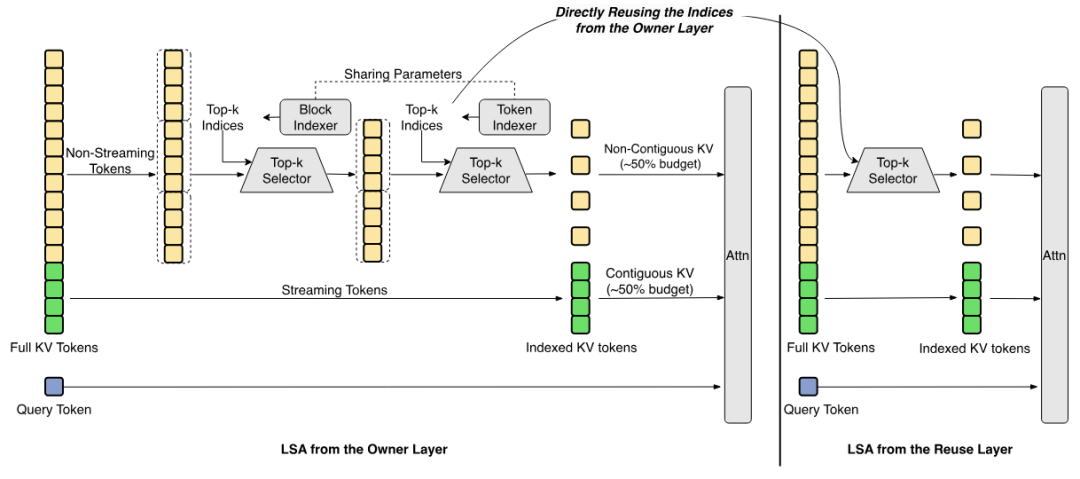
To address the challenges of long-context windows—a critical requirement for modern software development—LongCat-2.0 introduces "LongCat Sparse Attention." Traditional attention mechanisms often suffer from quadratic complexity, making the processing of entire codebases or long documentation difficult. By implementing sparse attention, Meituan enables the model to maintain high efficiency even as the context length grows. This is complemented by "N-gram Embedding," which enhances the model's ability to represent information at the token level. By capturing local dependencies through N-grams within the embedding layer, the model gains a more nuanced understanding of code syntax and structural patterns, which are often repetitive and highly structured.
Empowering Agentic Coding: Understanding, Generation, and Execution
The primary mission of LongCat-2.0 is to serve "Agentic Coding" tasks. Unlike traditional code assistants that focus solely on snippet generation, an agentic approach implies a model capable of acting as an autonomous or semi-autonomous developer. This requires a holistic mastery of three distinct phases: understanding, generation, and execution.
- Code Understanding: Through the combination of N-gram embeddings and sparse attention, LongCat-2.0 can parse complex logic across multiple files, identifying dependencies and architectural patterns that simpler models might miss.
- Code Generation: The model leverages its 1.6T parameter knowledge base to produce syntactically correct and contextually relevant code. The dynamic activation ensures that the most relevant "experts" within the model are utilized for specific programming languages or frameworks.
- Code Execution: A standout feature mentioned is the reinforcement of execution performance. This suggests that LongCat-2.0 is not just predicting the next token but is optimized to produce code that actually runs and achieves the desired outcome, a critical step for autonomous agents that must iterate on their own work.
Industry Impact
Strengthening the Open-Source Ecosystem
By open-sourcing a model of this magnitude, Meituan is providing the global developer community with a powerful tool for building advanced AI agents. The focus on "Agentic Coding" aligns with the industry trend of moving from simple completion tools to comprehensive AI software engineers. This release allows researchers and companies to build upon a foundation that has already solved many of the efficiency problems associated with trillion-parameter models.
Accelerating Domestic Hardware Adoption
One of the most strategic aspects of this release is the inclusion of inference code specifically optimized for domestic AI hardware. In the current global landscape, the ability to run state-of-the-art models on local silicon is vital for technological self-reliance. By providing the necessary code to run LongCat-2.0 on domestic cards, Meituan is bridging the gap between high-level algorithmic research and the practical constraints of hardware availability. This move is likely to accelerate the adoption of domestic AI chips in production environments, as developers now have a top-tier model that is "ready to wear" on local infrastructure.
Frequently Asked Questions
Question: What makes LongCat-2.0 different from standard large language models?
LongCat-2.0 is specifically optimized for "Agentic Coding" and long-context efficiency. While it has 1.6 trillion parameters, it uses dynamic activation to only use about 48 billion at a time. It also features unique architectural components like LongCat Sparse Attention and N-gram Embedding to better handle complex code structures.
Question: Does LongCat-2.0 support hardware other than standard global GPUs?
Yes. A key part of this release is the open-sourcing of inference code specifically designed for domestic AI hardware (domestic cards). This ensures that the model can be efficiently deployed on a wider range of computing platforms, particularly those within the domestic ecosystem.
Question: What are the main benefits of N-gram Embedding in this model?
N-gram Embedding improves the model's token-level representation capabilities. In the context of coding, this helps the model better capture the specific patterns and local structures inherent in programming languages, leading to more accurate code understanding and generation.