Meituan Open-Sources LongCat-2.0: A 1.6T Parameter Model Optimized for Agentic Coding and Domestic GPU Inference
Meituan's technical team has officially announced the open-sourcing of LongCat-2.0, a massive large language model featuring 1.6 trillion total parameters. Designed specifically for real-world Agentic Coding tasks, the model utilizes a sparse architecture with an average activation of approximately 48 billion parameters. LongCat-2.0 introduces innovative technical features including LongCat Sparse Attention and N-gram Embedding to enhance long-context processing and token-level representation. A significant highlight of this release is the inclusion of inference code specifically optimized for domestic Chinese computing cards, aiming to lower the barrier for high-performance AI deployment. The model demonstrates advanced capabilities in code understanding, generation, and execution through the integration of dynamic activation strategies.
Key Takeaways
- Massive Scale with Efficient Activation: LongCat-2.0 features a total of 1.6 trillion parameters, while maintaining efficiency through an average activation of 48 billion parameters.
- Specialized for Agentic Coding: The model is purpose-built for real-world coding tasks, focusing on the full lifecycle of code understanding, generation, and execution.
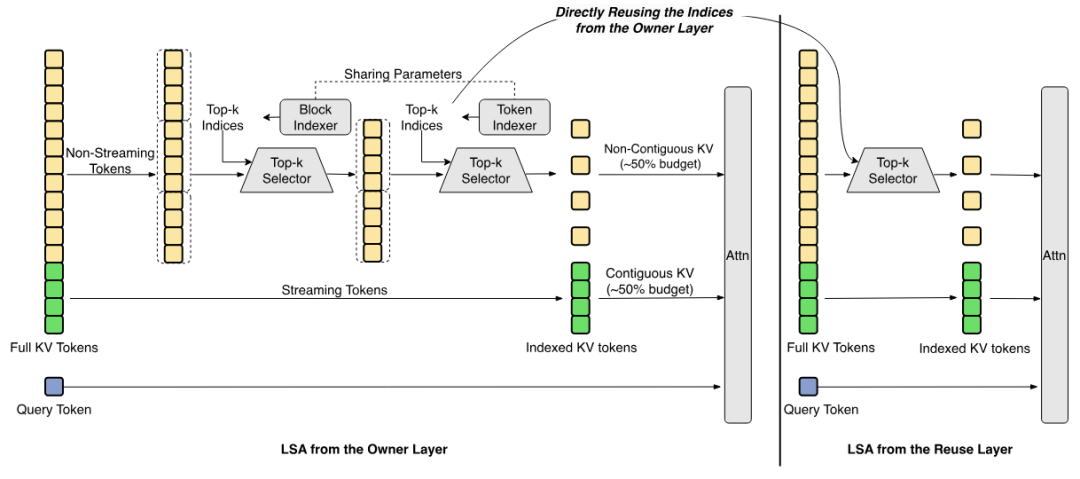
- Architectural Innovations: Meituan has introduced LongCat Sparse Attention and N-gram Embedding to solve challenges in long-context processing and token representation.
- Domestic Hardware Support: The release includes dedicated inference code for domestic Chinese GPUs, facilitating localized AI infrastructure development.
- Dynamic Performance: The use of dynamic activation further strengthens the model's ability to handle complex programming logic and execution environments.
In-Depth Analysis
Architectural Breakthroughs: Sparse Attention and N-gram Embedding
Meituan's LongCat-2.0 represents a significant technical milestone in the development of models tailored for the programming domain. At the core of its architecture are two primary innovations: LongCat Sparse Attention and N-gram Embedding. These features are specifically designed to address the inherent complexities of code, which often involve long-range dependencies and highly structured syntax.
The LongCat Sparse Attention mechanism is a critical addition for handling long-context scenarios. In Agentic Coding, models often need to process entire repositories or extensive documentation to understand the context of a single function. By utilizing sparse attention, LongCat-2.0 can maintain high efficiency without the computational overhead typically associated with standard dense attention mechanisms in trillion-parameter models. This allows for more effective processing of long sequences, which is essential for modern software development workflows.
Furthermore, the introduction of N-gram Embedding enhances the model's token-level representation. Unlike standard natural language, code relies heavily on specific patterns and recurring sequences of characters. N-gram Embedding allows the model to capture these nuances more effectively, leading to better precision in code generation and a deeper understanding of programming syntax. This architectural choice directly supports the model's goal of excelling in "Agentic Coding," where the AI must act as an autonomous or semi-autonomous developer.
Optimized for the Agentic Coding Lifecycle
LongCat-2.0 is not merely a general-purpose model; it is specifically engineered for "Agentic Coding." This paradigm shifts the focus from simple code completion to a more holistic approach involving code understanding, generation, and execution. The model's 1.6T parameter scale, combined with its 48B average activation, provides the necessary capacity to reason through complex architectural patterns and logic.
The integration of dynamic activation strategies is a key component of this performance. By dynamically adjusting which parameters are activated during the inference process, the model can allocate its computational resources more effectively based on the complexity of the task at hand. This is particularly useful in execution tasks, where the model must predict the outcome of code or identify potential runtime errors. The result is a model that is not only powerful in theory but also highly performant in practical, real-world coding environments where execution accuracy is paramount.
Strategic Support for Domestic Computing Infrastructure
A standout feature of the LongCat-2.0 release is Meituan's decision to provide synchronized inference code for domestic Chinese computing cards. This move addresses a critical need in the current AI landscape, where hardware accessibility can often be a bottleneck for deploying massive models like those in the 1.6T parameter class.
By optimizing the inference code for domestic hardware, Meituan is ensuring that a wider range of developers and enterprises can utilize LongCat-2.0 within their existing infrastructure. This support is vital for the growth of the local AI ecosystem, as it reduces reliance on specific international hardware chains and promotes the use of localized high-performance computing solutions. The availability of this code alongside the model weights marks a commitment to open-source accessibility and the practical utility of large-scale models in diverse hardware environments.
Industry Impact
The release of LongCat-2.0 is poised to have a multi-faceted impact on the AI and software development industries. First, by open-sourcing a 1.6T parameter model, Meituan is pushing the boundaries of what is available in the public domain, challenging other tech giants to follow suit with high-capacity specialized models. The focus on Agentic Coding highlights a growing trend where AI is moving from a passive assistant to an active participant in the development process.
Second, the technical innovations in sparse attention and embedding techniques provide a blueprint for other developers looking to optimize models for long-context and structured data. This could lead to a new wave of specialized LLMs that are more efficient and capable in technical domains such as engineering, legal analysis, or scientific research.
Finally, the explicit support for domestic GPU inference is a strategic contribution to the localized AI industry. It encourages the adoption of domestic hardware by providing high-quality, ready-to-use software implementations, potentially accelerating the maturation of the domestic AI chip market and its software ecosystem.
Frequently Asked Questions
Question: What makes LongCat-2.0 different from standard large language models?
LongCat-2.0 is specifically optimized for Agentic Coding tasks. Unlike general models, it incorporates LongCat Sparse Attention and N-gram Embedding to better handle the long-context and token-level requirements of programming. Additionally, it uses a sparse architecture with 1.6T total parameters but only 48B average activation for efficiency.
Question: Does LongCat-2.0 support inference on non-international hardware?
Yes, one of the key features of this open-source release is the inclusion of inference code specifically designed for domestic Chinese computing cards. This allows users to run the model on local hardware infrastructure with optimized performance.
Question: What are the primary use cases for LongCat-2.0?
The model is designed for real-world coding tasks, including deep code understanding, automated code generation, and code execution analysis. It is particularly suited for environments where an AI agent needs to interact with large codebases or perform complex programming logic.