Meituan Open-Sources AIGC Poster Generation Framework: Innovation in the Generation-Editing-Evaluation Closed Loop
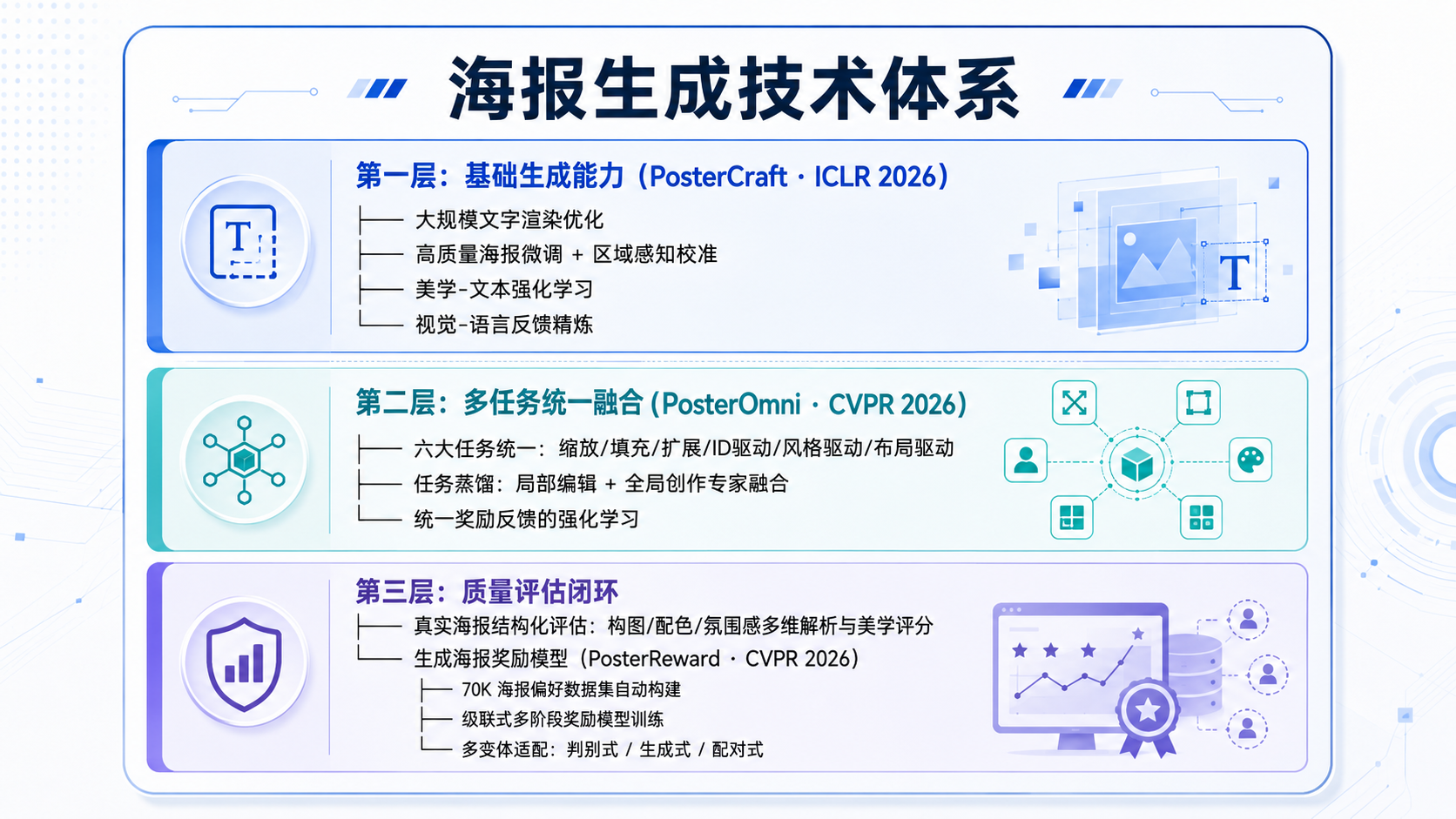
Meituan’s intelligent creation team has developed and open-sourced a comprehensive technical system for AIGC-driven poster generation. The framework is built around a unique "Generation-Editing-Evaluation" closed loop, ensuring a seamless workflow from initial creation to final quality control. Successfully implemented in Meituan Waimai and various brand IP scenarios, this technology aims to automate and optimize visual marketing content at scale. By open-sourcing the entire system, Meituan provides the industry with a proven architecture for intelligent content creation, bridging the gap between automated generation and practical, editable business assets. This move underscores Meituan's commitment to advancing controllable AI within the digital marketing and design sectors.
Key Takeaways
- Comprehensive Technical System: Meituan has established a complete AIGC technical architecture specifically designed for poster generation.
- Closed-Loop Workflow: The framework utilizes a "Generation-Editing-Evaluation" cycle to ensure that AI-generated outputs meet commercial standards.
- Proven Implementation: The technology is already operational within high-traffic scenarios, including Meituan Waimai (food delivery) and brand IP development.
- Open-Source Commitment: Meituan has officially open-sourced the entire technical system to foster innovation within the AI and design communities.
In-Depth Analysis
The Architecture of the Generation-Editing-Evaluation Closed Loop
Meituan's approach to AIGC poster generation is centered on a tripartite technical architecture: Generation, Editing, and Evaluation. This "closed loop" addresses the common pitfalls of standard AI image generation, where outputs may be visually impressive but lack the precision and flexibility required for commercial use.
The "Generation" phase focuses on the initial creation of the poster based on specific inputs and creative prompts. However, the "Editing" component is what sets this system apart. In a professional marketing environment, static images are rarely sufficient; the ability to refine, move, and adjust specific elements—such as text placement, product images, or background colors—is essential. By incorporating an editing layer, Meituan ensures that the AIGC process remains flexible and adaptable to specific branding or layout requirements.
Finally, the "Evaluation" phase serves as a critical quality gate. This stage involves assessing the generated and edited posters against predefined standards. By integrating these three stages into a single loop, Meituan ensures that the AIGC process is not just a one-off generation but a controllable and iterative production pipeline that consistently produces high-quality, brand-compliant assets.
Real-World Implementation in Meituan Waimai and Brand IP
The practical application of this technology is evidenced by its deployment in Meituan Waimai (food delivery) and various brand IP scenarios. In the context of food delivery, the demand for high-volume, high-quality visual content is constant. Merchants and the platform itself require a steady stream of posters for promotions, seasonal events, and daily marketing. Meituan’s AIGC system allows for the rapid production of these posters, significantly reducing the time and resources typically required for manual design.
Furthermore, the application in brand IP scenarios suggests that the system is capable of maintaining strict brand consistency while generating diverse creative assets. The transition from an internal tool to an open-source project indicates that the system has reached a level of maturity and stability capable of handling large-scale, real-world commercial demands. This implementation demonstrates that AIGC can move beyond experimental use cases and become a core component of a major tech company's operational workflow.
Industry Impact
The decision by Meituan to open-source its AIGC poster generation system marks a significant contribution to the global AI community. By sharing a framework that has been battle-tested in high-traffic environments like Meituan Waimai, the company provides a blueprint for other organizations looking to integrate AIGC into their marketing and creative workflows.
This move highlights a broader shift in the AI industry from generic image generation toward specialized, task-oriented "intelligent creation" systems. The focus on a closed loop—specifically including editing and evaluation—addresses the industry's growing need for "controllable AI." For businesses, the value of AI lies not just in its ability to create, but in its ability to create within the constraints of professional standards and brand guidelines. Meituan's open-source release provides a practical path forward for developers and companies seeking to implement reliable, editable, and evaluable AI design tools.
Frequently Asked Questions
What is the core structure of Meituan's AIGC poster system?
The system is built on a "Generation-Editing-Evaluation" technical closed loop, which covers the entire lifecycle of poster creation from initial generation to final quality assessment and refinement.
Where has this technology been applied within Meituan?
It has been successfully implemented within Meituan's own ecosystem, specifically in Meituan Waimai (food delivery) and various brand IP scenarios, to support large-scale marketing and creative needs.
Is Meituan's AIGC poster generation technology available for public use?
Yes, Meituan has officially open-sourced the complete technical system, making it available for developers, researchers, and businesses to utilize, study, and build upon for their own intelligent creation projects.