LongCat Open Sources VitaBench 2.0: The First Benchmark for Long-Term Dynamic User Modeling in AI Agents
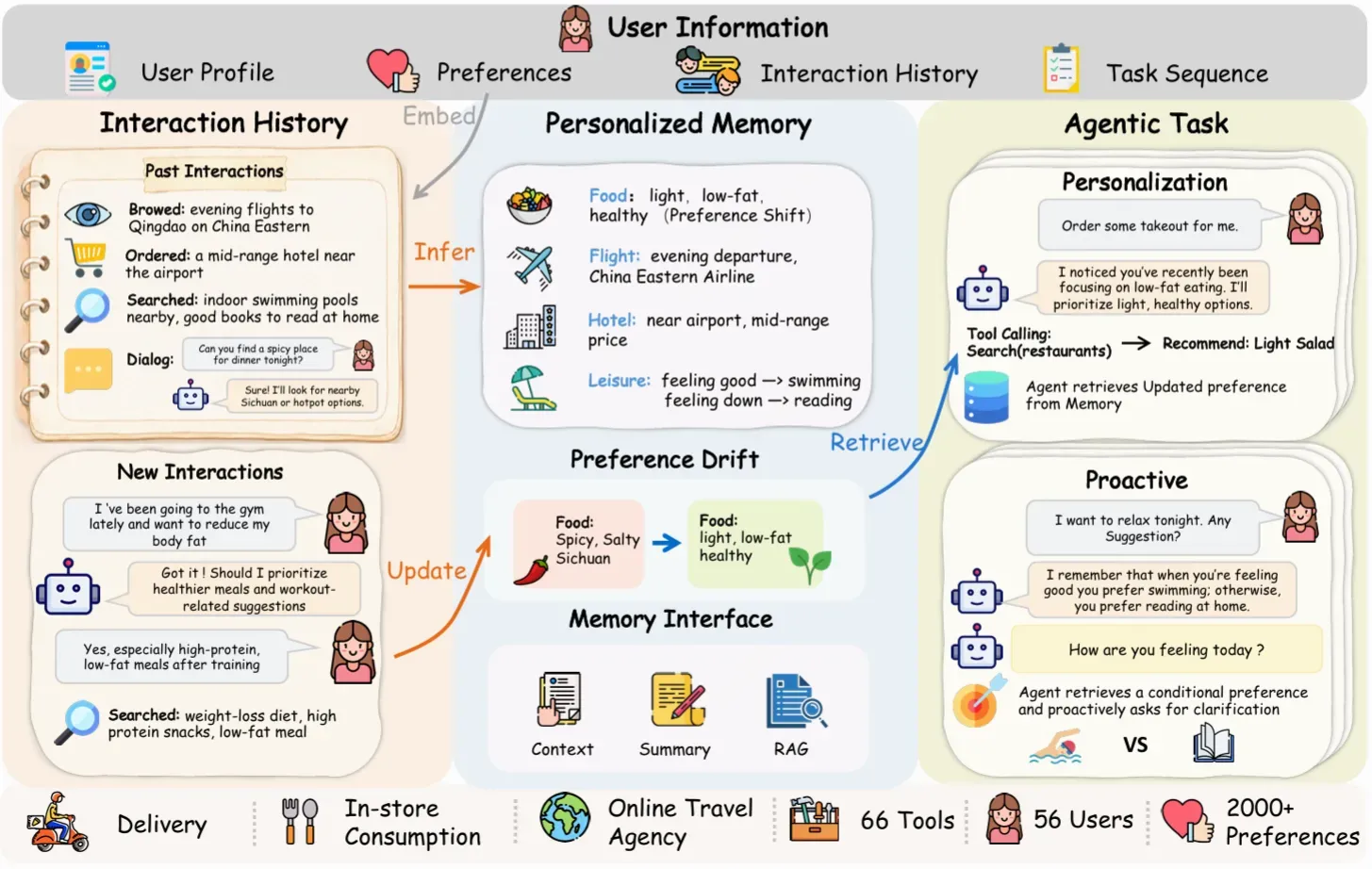
LongCat, supported by the Meituan Technical Team, has officially released VitaBench 2.0, a groundbreaking open-source benchmark designed to evaluate Large Language Models (LLMs) in real-life scenarios. As the first benchmark specifically focused on long-term dynamic user modeling, VitaBench 2.0 shifts the focus from static performance to the complexities of evolving human-AI interactions. The framework provides a systematic approach to measuring two critical capabilities: personalization and proactivity. By simulating long-term and dynamic user engagements, VitaBench 2.0 aims to set a new standard for developing AI agents that can maintain consistency and take initiative over extended periods. This release marks a significant advancement in the industry's ability to assess how AI systems adapt to the fluid nature of real-world user needs.
Key Takeaways
- First of its Kind: VitaBench 2.0 is the industry's first benchmark dedicated to long-term dynamic user modeling within real-life scenarios.
- Focus on Dynamics: The benchmark evaluates how Large Language Models (LLMs) handle evolving, long-term interactions rather than isolated tasks.
- Core Metrics: It specifically measures the personalization and proactivity of AI agents during user interactions.
- Systematic Evaluation: Provides a structured framework for assessing AI behavior in complex, real-world environments.
- Open Source Contribution: Released by LongCat and the Meituan Technical Team to advance the field of intelligent agents.
In-Depth Analysis
Redefining AI Evaluation through Long-Term Dynamics
The introduction of VitaBench 2.0 by LongCat represents a fundamental shift in how the AI industry approaches model evaluation. Traditional benchmarks often focus on static, short-term tasks where a model is given a prompt and expected to produce a single, accurate response. However, real-world utility for AI agents requires the ability to maintain context and adapt to a user's changing needs over days, weeks, or even months.
VitaBench 2.0 addresses this gap by focusing on "long-term dynamic user modeling." This means the benchmark does not just look at a single interaction but evaluates the model's performance across a continuous timeline of engagement. By simulating "real-life scenarios," the benchmark forces LLMs to navigate the unpredictability and evolving nature of human behavior. This approach ensures that models are tested for their ability to sustain a coherent persona and understanding of the user, which is essential for applications ranging from personal assistants to long-term educational tutors.
Measuring Personalization and Proactivity
At the heart of VitaBench 2.0 are two specific pillars of evaluation: personalization and proactivity. These metrics are critical for the next generation of AI agents that aim to move beyond being simple tools to becoming true digital companions.
Personalization in the context of VitaBench 2.0 refers to the model's capacity to tailor its responses and behavior based on the history and specific characteristics of the user. In a dynamic environment, this involves not just remembering facts, but understanding the user's evolving preferences and communication style.
Proactivity, on the other hand, evaluates the model's ability to take the initiative. In a long-term interaction, a truly intelligent agent should not always wait for a command; it should be able to anticipate user needs or suggest actions based on the dynamic context of the conversation. By systematically evaluating these two traits, VitaBench 2.0 provides developers with a clear roadmap for improving the "intelligence" and "helpfulness" of their agents in ways that traditional benchmarks cannot capture.
Industry Impact
The release of VitaBench 2.0 is poised to have a significant impact on the AI research and development landscape. By providing a standardized, open-source framework for long-term modeling, it allows developers to move away from anecdotal evidence of "agentic behavior" toward rigorous, data-driven assessment.
For the AI industry, this benchmark highlights the growing importance of "agentic" capabilities over raw linguistic fluency. As companies race to build autonomous agents for enterprise and consumer use, the ability to prove that an agent can remain personalized and proactive over time will become a key competitive advantage. Furthermore, by open-sourcing this tool, LongCat and the Meituan Technical Team are fostering a collaborative environment where the community can refine what it means for an AI to be truly "dynamic" and "user-centric."
Frequently Asked Questions
Question: What makes VitaBench 2.0 different from other AI benchmarks?
Unlike standard benchmarks that test models on static datasets or short-term logic, VitaBench 2.0 is the first to focus on long-term dynamic user modeling in real-life scenarios. It evaluates how models adapt to users over time rather than just answering one-off questions.
Question: What are the primary capabilities evaluated by VitaBench 2.0?
The benchmark focuses on two core capabilities: personalization (the ability to adapt to specific user traits and history) and proactivity (the ability of the AI to take initiative within a dynamic interaction).
Question: Who developed VitaBench 2.0 and is it accessible to the public?
VitaBench 2.0 was developed by LongCat and the Meituan Technical Team. It has been open-sourced to provide the AI community with a systematic way to evaluate long-term agent performance.