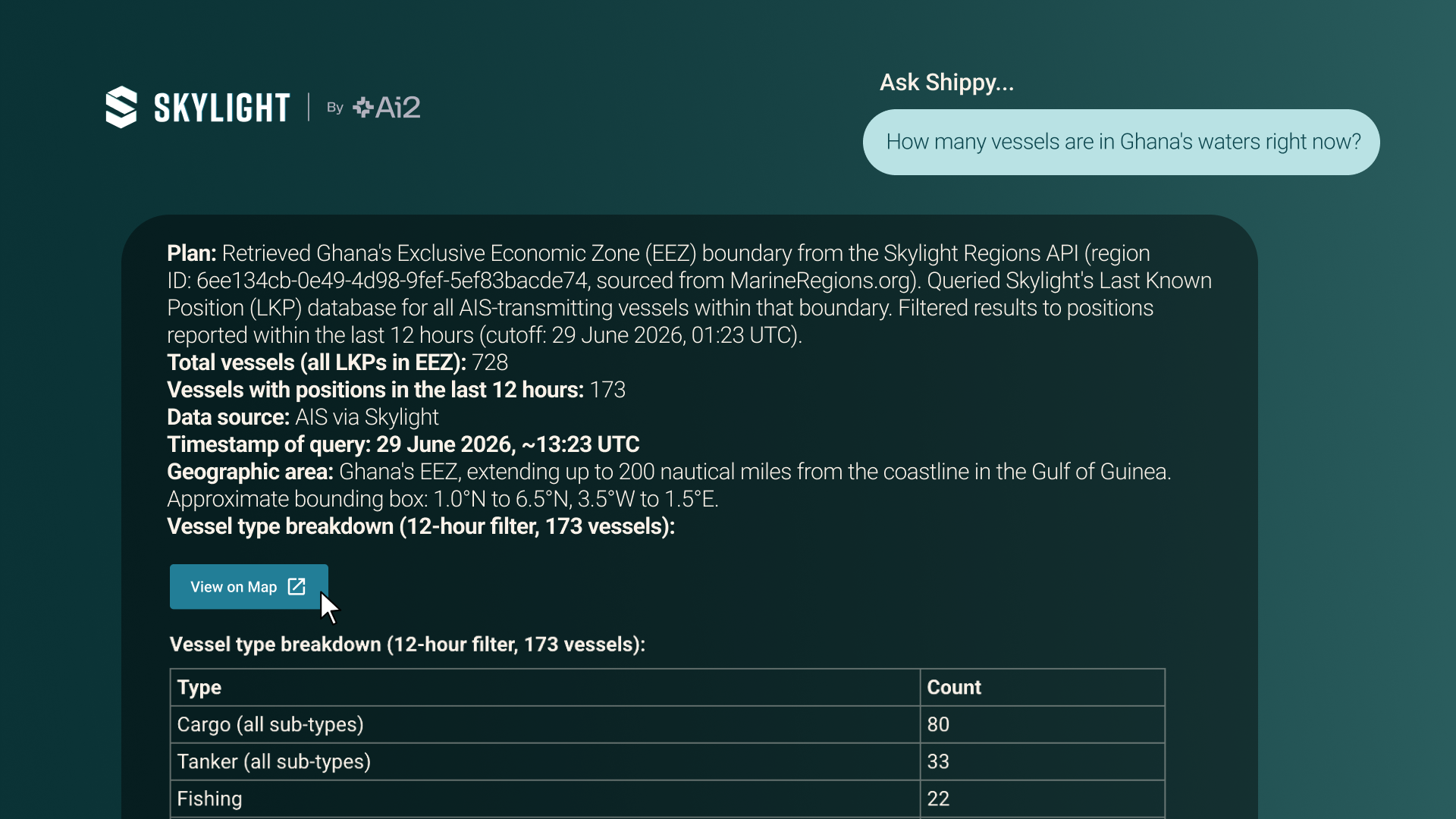
Lessons from Shippy: How AllenAI is Redefining the Architecture of Autonomous AI Agents
The development of Shippy by AllenAI marks a significant milestone in the transition from static Large Language Models (LLMs) to dynamic, autonomous agents. This analysis explores the core lessons learned during the Shippy project, focusing on the architectural shifts required to build reliable agentic workflows. By moving beyond simple prompt-response cycles, Shippy demonstrates the necessity of robust tool integration, iterative feedback loops, and sophisticated error-handling mechanisms. The project highlights that building effective agents is less about the underlying model's size and more about the framework that governs its interaction with external environments. These insights provide a roadmap for developers looking to create AI systems capable of executing complex, multi-step tasks with high degrees of autonomy and reliability in real-world scenarios.
Key Takeaways
- Shift to Agentic Workflows: Building agents like Shippy requires a fundamental move from single-turn LLM interactions to multi-step, iterative workflows that can self-correct.
- Tool Integration is Paramount: The success of an agent depends heavily on its ability to interact with external tools and APIs seamlessly, requiring a standardized communication layer.
- Reliability through Feedback: One of the primary lessons from Shippy is that agents must be able to observe the results of their actions and adjust their strategies based on environmental feedback.
- Architecture Over Model Size: Effective agency is often achieved through superior system architecture and orchestration rather than simply relying on the largest available language model.
In-Depth Analysis
The Evolution from Models to Autonomous Agents
The development of Shippy represents a broader industry shift from viewing AI as a conversational interface to viewing it as an autonomous actor. Traditional LLM applications focus on generating text based on a static prompt. However, the Shippy project emphasizes that an "agent" is defined by its ability to pursue a goal through a series of actions. This requires the system to maintain state, plan future steps, and evaluate progress. The lessons from Shippy suggest that the complexity of building agents lies in the orchestration layer—the software that surrounds the model—which must manage memory, context, and the execution of external commands. This shift necessitates a new design philosophy where the LLM acts as the 'reasoning engine' while the surrounding framework provides the 'body' and 'senses' needed to interact with the world.
Overcoming the Reliability Gap in Agentic Systems
A critical challenge identified during the construction of Shippy is the inherent unpredictability of autonomous agents. When an agent is given the freedom to choose its own path to a solution, the potential for error increases exponentially. The Shippy project taught developers that reliability cannot be achieved through better prompting alone. Instead, it requires building 'guardrails' and 'verification loops' into the agent's core logic. For instance, when Shippy attempts to use a tool or write code, the system must automatically validate the output and provide the error logs back to the agent for immediate correction. This iterative process of 'try-fail-learn' is what allows agents to handle complex tasks that would otherwise cause a standard LLM to hallucinate or stall. The focus moves from 'getting it right the first time' to 'building a system that can eventually get it right.'
The Role of Tool Use and Environment Interaction
Shippy serves as a case study in the importance of tool-augmented generation. For an agent to be useful, it must be able to step outside the bounds of its training data and interact with live data or software. The AllenAI team’s experience with Shippy highlights that the interface between the agent and its tools must be extremely well-defined. This involves creating robust abstractions for APIs, databases, and file systems so that the agent can 'understand' the capabilities and limitations of the tools at its disposal. Furthermore, the environment must provide rich, structured feedback. If an agent executes a command and receives a vague error message, it is unlikely to succeed. Shippy demonstrates that the more descriptive and structured the environment's feedback is, the more effectively the agent can navigate complex problem spaces.
Industry Impact
The insights gained from the Shippy project have profound implications for the AI industry, particularly for the open-source community and enterprise AI development. First, it validates the trend toward 'small, specialized agents' over 'monolithic generalists.' By showing that sophisticated behavior can be orchestrated through well-designed frameworks, AllenAI encourages a move toward more efficient, task-specific AI deployments.
Second, the focus on agentic workflows is likely to accelerate the development of standardized protocols for agent-to-tool communication. As more organizations attempt to build their own versions of Shippy, the demand for interoperable toolsets and evaluation benchmarks for agents will grow. Finally, the emphasis on iterative error correction and environmental feedback sets a new standard for AI reliability, pushing the industry to move beyond 'chatbots' and toward 'digital workers' capable of handling end-to-end business processes with minimal human intervention.
Frequently Asked Questions
Question: What is Shippy and why is it significant for AI development?
Shippy is a project by AllenAI (Ai2) focused on exploring the best practices and architectural requirements for building autonomous AI agents. It is significant because it moves the conversation from how models 'think' to how they 'act,' providing a blueprint for creating more functional and reliable AI systems that can use tools and solve multi-step problems.
Question: How do agents like Shippy differ from standard LLMs like GPT-4?
While a standard LLM is a model that predicts the next token in a sequence, an agent like Shippy is a system that uses an LLM as a reasoning component to interact with an environment. Agents have 'agency,' meaning they can execute code, call APIs, and observe the results of their actions to achieve a specific goal, whereas a standard LLM typically provides a single response to a single prompt.
Question: What is the most important lesson learned from building Shippy?
The most important lesson is that reliability in AI agents is achieved through iterative feedback loops and robust system architecture rather than just the raw power of the underlying language model. Building a system that can detect its own errors and correct them is the key to moving from experimental prototypes to production-ready autonomous agents.