Meituan LongCat Team Open-Sources WBench: The First Systematic Multi-Round Evaluation Benchmark for Interactive Video World Models
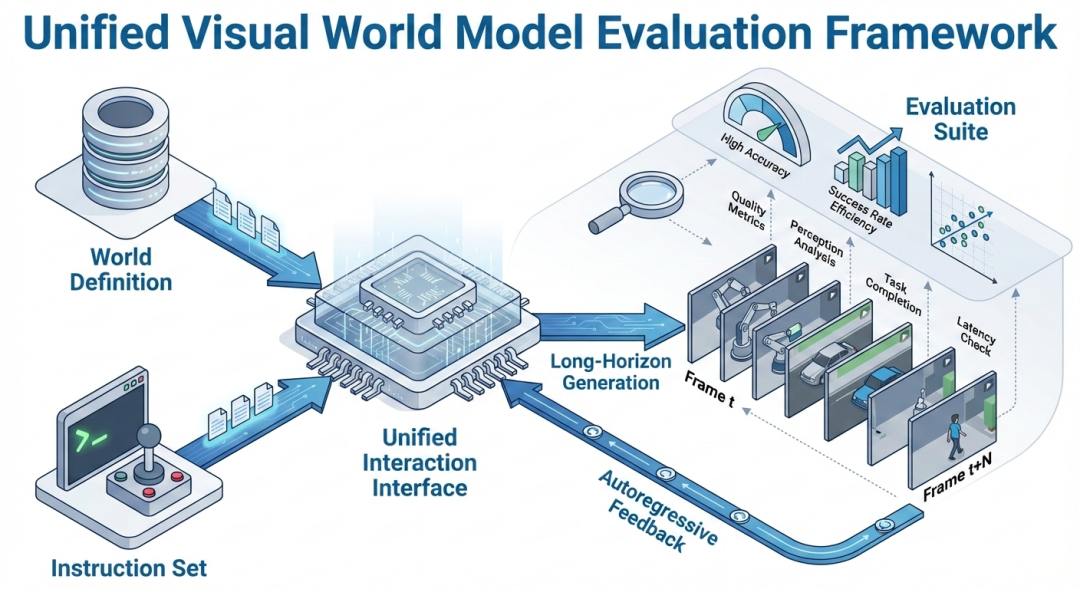
The Meituan LongCat team has officially introduced and open-sourced WBench, a pioneering evaluation framework designed to assess interactive video world models. Positioned as the first systematic multi-round benchmark in its field, WBench functions as a diagnostic tool—likened to a 'CT scanner'—to identify specific technical limitations within AI models. The benchmark focuses on the critical transition from 'passive viewing' to 'active interaction,' providing a structured way to measure how models perform across diverse scenarios, from lunar environments to complex urban settings. By open-sourcing this tool, the LongCat team aims to help the industry pinpoint exactly where current world models encounter bottlenecks during interactive sequences, moving beyond simple video generation toward true environmental simulation and multi-stage user engagement.
Key Takeaways
- Introduction of WBench: Meituan's LongCat team has developed and open-sourced WBench, the first systematic benchmark for interactive video world models.
- Multi-Round Evaluation: Unlike traditional single-step tests, WBench utilizes a multi-round approach to evaluate how models handle ongoing interactions.
- Diagnostic Capabilities: The framework acts as a 'CT scanner' for AI, pinpointing the exact failure points in the transition from passive observation to active engagement.
- Broad Environmental Scope: The benchmark is designed to test models across a wide range of simulations, including lunar walks and futuristic cyber cities.
In-Depth Analysis
The Diagnostic Power of WBench: A 'CT Scanner' for AI
The emergence of world models has shifted the focus of AI development from static image generation to dynamic video synthesis. However, understanding the internal limitations of these models has remained a challenge. The Meituan LongCat team addresses this by introducing WBench, a framework described as a 'CT scanner' for interactive video world models. This metaphor highlights the benchmark's primary function: it is not merely a scoring system but a diagnostic tool. By systematically probing the model's responses, WBench can accurately locate the specific technical 'bottlenecks' that prevent a model from maintaining consistency and logic during interactive sessions. This level of precision is essential for developers who need to understand why a model might fail when moving from a pre-rendered sequence to a user-driven interactive environment.
Bridging the Gap Between Passive Viewing and Active Interaction
One of the most significant hurdles in current AI research is the transition from 'passive viewing'—where a model generates a video based on a single prompt—to 'active interaction,' where the model must respond to continuous, multi-round inputs. WBench is specifically designed to measure this transition. By implementing a multi-round evaluation process, the benchmark tests the model's ability to maintain a coherent 'world' while the user or system interacts with it repeatedly. This is particularly relevant for complex simulations, such as 'moonwalks' or 'cyber cities,' where the environment must remain stable and reactive over time. The systematic nature of WBench ensures that the evaluation is not based on a single lucky generation but on the model's sustained performance across multiple layers of interaction, revealing the true boundaries of current world model capabilities.
Systematic Evaluation in Diverse Simulated Environments
The scope of WBench is notably broad, covering a spectrum of scenarios that range from the surreal to the highly complex. By testing models on tasks involving lunar environments and intricate urban landscapes (cyber cities), WBench provides a comprehensive look at how world models handle different physics, lighting, and architectural constraints. The 'systematic' aspect of the benchmark refers to its structured methodology, which ensures that every round of interaction is evaluated against consistent criteria. This allows for a standardized comparison between different world models, providing the industry with a clear map of the current state of the art and the specific areas where further research and development are required to achieve true interactive realism.
Industry Impact
The release of WBench by Meituan's LongCat team represents a significant milestone for the AI industry, particularly for those working on generative video and environmental simulation. By open-sourcing the benchmark, the team provides a standardized 'yardstick' that can be used by researchers globally to validate their world models. This standardization is crucial for accelerating progress, as it allows for a shared understanding of what constitutes a 'successful' interactive model. Furthermore, by focusing on the 'bottlenecks' of interaction, WBench directs industry attention toward the most pressing technical challenges, such as temporal consistency and interactive logic, rather than just visual fidelity. This shift in focus is likely to drive the development of more robust and capable world models that can eventually be applied in gaming, robotics, and virtual training environments.
Frequently Asked Questions
Question: What is WBench and who developed it?
WBench is the first systematic multi-round evaluation benchmark specifically designed for interactive video world models. It was developed and open-sourced by the LongCat team from Meituan Technology.
Question: Why is WBench compared to a 'CT scanner'?
It is compared to a 'CT scanner' because it is designed to perform a deep, diagnostic analysis of AI models. It helps developers pinpoint exactly where a world model fails or gets 'stuck' when transitioning from generating passive video to handling active, multi-round user interactions.
Question: What makes WBench different from other AI benchmarks?
Most existing benchmarks focus on 'passive' tasks like image or video generation from a single prompt. WBench is unique because it introduces a 'multi-round' evaluation system that specifically tests 'active interaction,' measuring how well a model can sustain a coherent world over several steps of engagement.