LongCat Releases VitaBench 2.0: A Pioneering Benchmark for Long-term Dynamic User Modeling in AI Agents
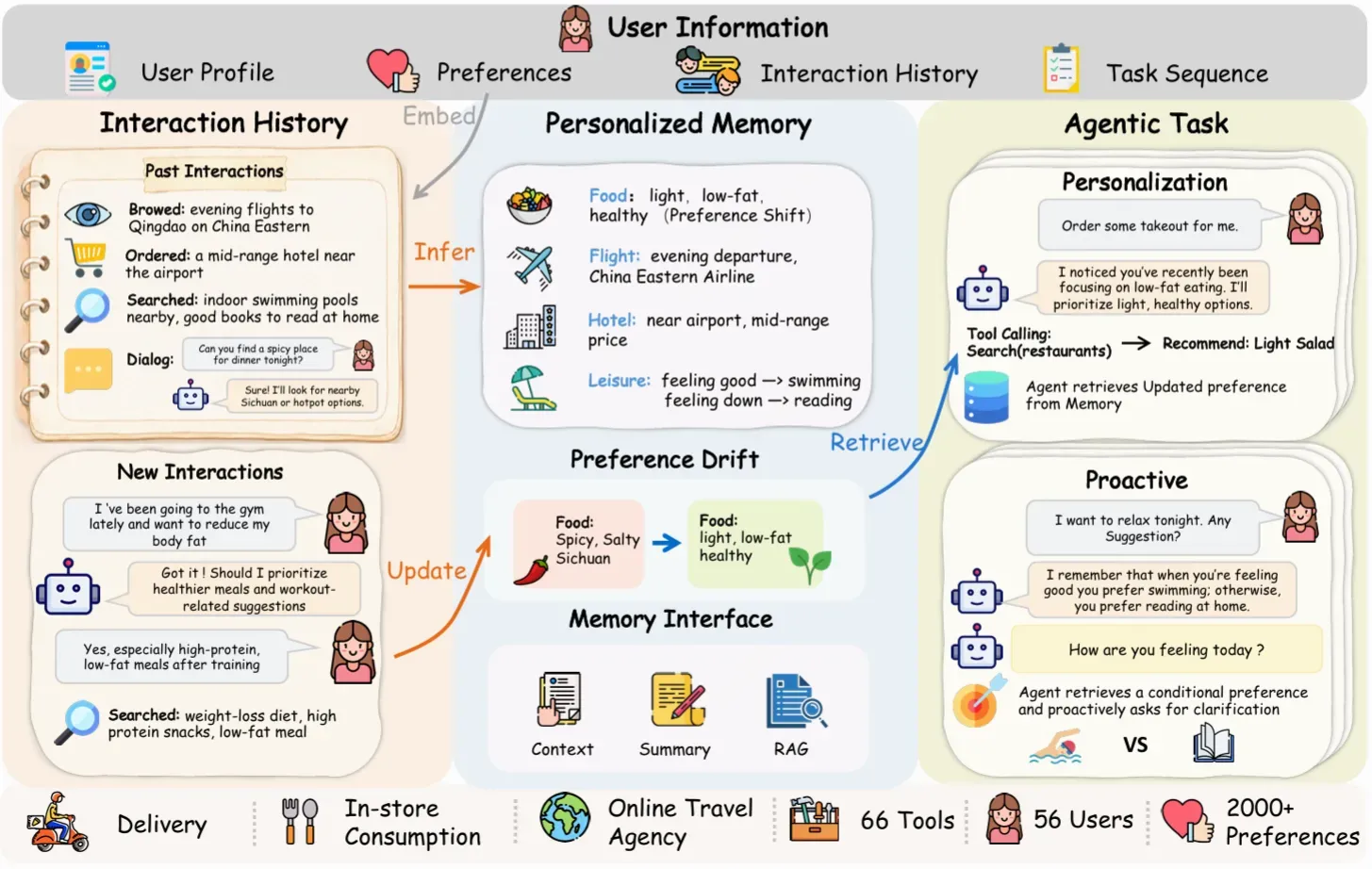
The Meituan technical team, under the LongCat project, has officially open-sourced VitaBench 2.0, marking a significant milestone in the evaluation of artificial intelligence. As the first benchmark specifically designed for real-life scenarios involving long-term dynamic user modeling, VitaBench 2.0 addresses a critical gap in current AI assessment frameworks. The benchmark provides a systematic approach to evaluating how Large Language Models (LLMs) handle personalization and proactivity within the context of sustained, evolving user interactions. By focusing on the complexities of real-world dynamics, VitaBench 2.0 aims to establish a new standard for developing AI agents that can truly understand and adapt to individual users over extended periods, moving beyond the limitations of static or short-term interaction models.
Key Takeaways
- First-of-its-Kind Benchmark: VitaBench 2.0 is the industry's first evaluation framework dedicated to long-term dynamic user modeling within authentic, real-life scenarios.
- Focus on Personalization: The benchmark systematically measures the ability of Large Language Models to maintain and apply personalized user data over extended interaction cycles.
- Proactivity Assessment: It introduces rigorous metrics for evaluating the proactivity of AI agents, ensuring they can anticipate user needs in a dynamic environment.
- Real-World Simulation: Unlike traditional static benchmarks, VitaBench 2.0 emphasizes the importance of 'real' and 'dynamic' interactions, reflecting the complexity of human-AI relationships.
In-Depth Analysis
Redefining Agent Evaluation with VitaBench 2.0
The release of VitaBench 2.0 by the LongCat team represents a fundamental shift in how the industry perceives and tests the capabilities of AI agents. Historically, benchmarks for Large Language Models (LLMs) have focused on short-term task completion, logic puzzles, or static knowledge retrieval. However, as AI transitions from simple chatbots to sophisticated personal assistants, the need for 'long-term dynamic user modeling' has become paramount.
VitaBench 2.0 fills this void by providing a structured environment where models are tested on their ability to remember, interpret, and act upon user information that changes over time. This 'dynamic' aspect is crucial; in real life, user preferences, schedules, and contexts are not fixed. An agent that cannot adapt to these shifts fails to provide a truly integrated user experience. By open-sourcing this benchmark, the Meituan technical team is providing the global AI community with the tools necessary to move toward more resilient and context-aware intelligent systems.
The Pillars of Personalization and Proactivity
At the core of VitaBench 2.0 are two critical metrics: personalization and proactivity. These are the benchmarks of a 'mature' AI agent. Personalization in this context goes beyond simply remembering a user's name; it involves understanding deep-seated preferences and the nuances of individual behavior patterns across long-term interactions. VitaBench 2.0 evaluates whether a model can maintain this thread of personalization without losing coherence or accuracy as the volume of interaction data grows.
Proactivity, the second pillar, is perhaps the more challenging capability to measure. A proactive agent does not merely wait for a command; it uses its long-term understanding of the user to suggest actions or provide information before it is explicitly requested. VitaBench 2.0 creates scenarios that test whether an LLM can identify the 'right' moment to intervene or assist, based on the dynamic flow of a user's real-life activities. This systematic evaluation of proactivity ensures that the next generation of AI agents will be more than just reactive tools—they will be active participants in enhancing user productivity and daily life.
Industry Impact
The introduction of VitaBench 2.0 is expected to have a profound impact on the AI research and development landscape. By setting a 'new benchmark' for long-term dynamic agents, it encourages developers to prioritize memory management and contextual reasoning over simple token prediction. For the industry, this means a shift toward agents that are more reliable and 'human-like' in their interaction styles.
Furthermore, because VitaBench 2.0 is rooted in 'real-life scenarios,' it bridges the gap between laboratory performance and real-world utility. Companies developing consumer-facing AI products can use this benchmark to ensure their models are ready for the unpredictable nature of human behavior. As an open-source project from the LongCat team, it also fosters a collaborative environment where researchers can contribute to the evolution of user modeling standards, ultimately accelerating the deployment of sophisticated, personalized AI across various sectors, from e-commerce to personal productivity.
Frequently Asked Questions
Question: What makes VitaBench 2.0 different from other AI benchmarks?
VitaBench 2.0 is unique because it is the first to focus specifically on long-term dynamic user modeling in real-life scenarios. While other benchmarks might test general intelligence or specific tasks, VitaBench 2.0 evaluates how well an AI can maintain personalization and show proactivity over a long period of changing user interactions.
Question: Why is 'dynamic' modeling important for AI agents?
In the real world, user needs and contexts are constantly changing. Dynamic modeling allows an AI agent to update its understanding of the user in real-time. Without this capability, an AI would remain stuck with outdated information, leading to poor personalization and a lack of relevance in its suggestions or actions.
Question: Who can benefit from the open-sourcing of VitaBench 2.0?
AI researchers, developers, and tech companies focusing on Large Language Models and intelligent agents can benefit. It provides a standardized way to measure and improve the personalization and proactivity of their models, ensuring they perform effectively in complex, long-term user interaction scenarios.