Meituan Open Sources Innovative AIGC Poster Generation System Featuring a Generation-Editing-Evaluation Closed Loop
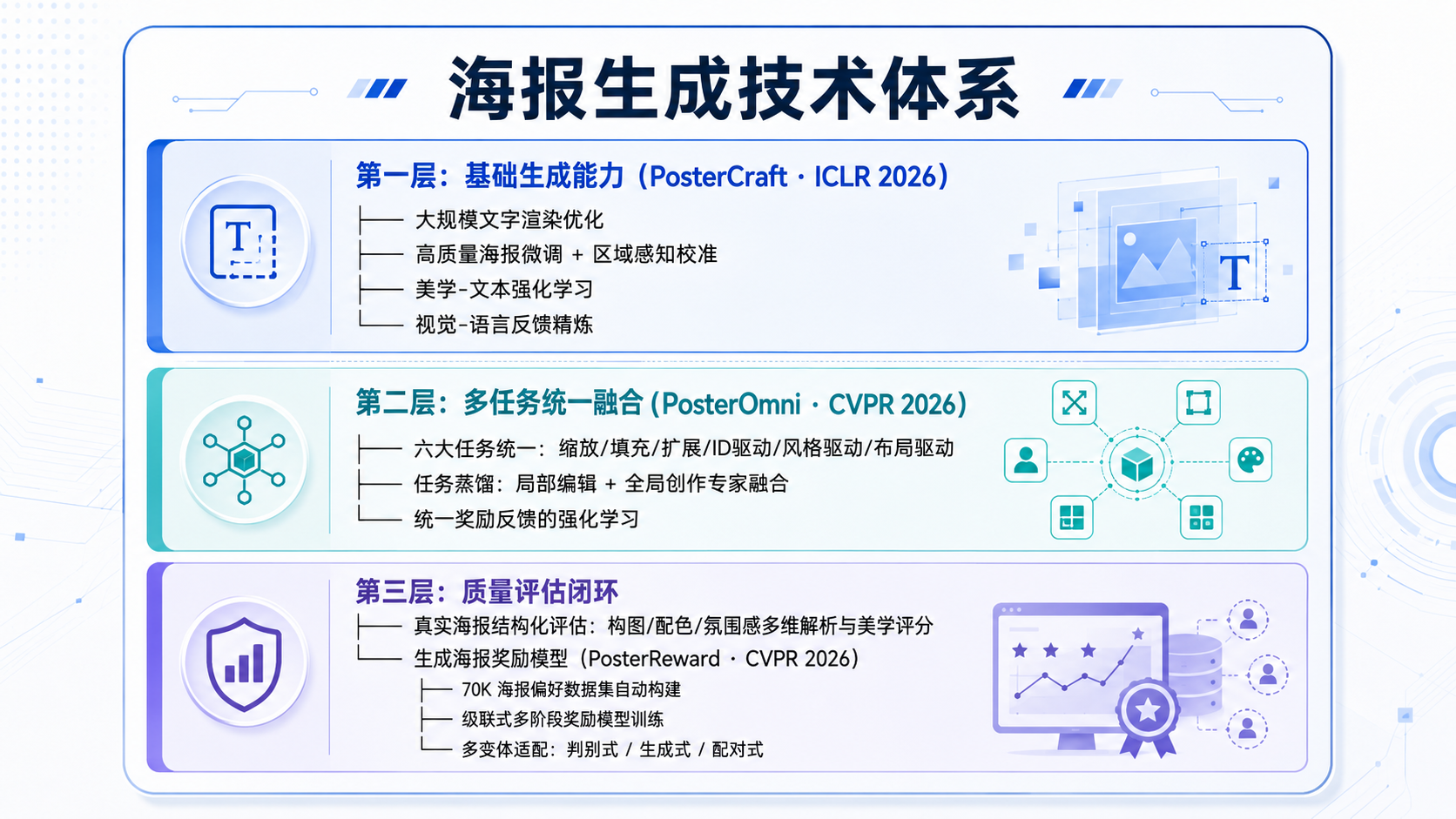
Meituan's Intelligent Creation Team has officially unveiled and open-sourced its comprehensive technical system for AIGC-driven poster generation. The framework is built around a sophisticated "Generation-Editing-Evaluation" closed loop, designed to address the complexities of automated visual content creation. By integrating these three critical phases, Meituan has moved beyond simple image generation to a professional-grade production pipeline. The system has already seen successful implementation in high-demand scenarios such as Meituan Waimai (food delivery) and various brand IP initiatives. This open-source release provides the developer community with a robust architecture for scaling AI design capabilities, emphasizing the transition from experimental AI outputs to reliable, commercially viable marketing assets. The move highlights Meituan's commitment to advancing AIGC technology and fostering collaborative innovation within the global technical ecosystem.
Key Takeaways
- Comprehensive Technical System: Meituan has developed a full-stack AIGC framework specifically tailored for the automated generation of commercial posters.
- Closed-Loop Architecture: The system utilizes a unique "Generation-Editing-Evaluation" workflow, ensuring that AI-generated content meets professional standards through iterative refinement and quality assessment.
- Proven Commercial Application: The technology is currently deployed within Meituan Waimai and brand IP scenarios, demonstrating its ability to handle large-scale, real-world marketing demands.
- Open-Source Commitment: In a major contribution to the AI community, Meituan has fully open-sourced the technical system, allowing for widespread adoption and collaborative improvement.
In-Depth Analysis
The "Generation-Editing-Evaluation" Technical Closed Loop
At the heart of Meituan's AIGC innovation is the "Generation-Editing-Evaluation" closed loop. This structured approach addresses one of the most significant challenges in the AIGC field: the gap between raw AI output and professional-grade commercial design.
In the Generation phase, the system leverages generative models to create initial poster layouts and visual elements based on specific business inputs. However, recognizing that initial AI outputs may not always align perfectly with brand requirements or aesthetic nuances, the Editing phase introduces a layer of controllability. This allows for the precise adjustment of elements, text placement, and color schemes, ensuring the output is not just a random creation but a targeted piece of communication.
Finally, the Evaluation phase completes the loop. By implementing automated evaluation metrics, the system can judge the quality of the generated and edited posters. This ensures that only the highest-quality assets proceed to the final deployment stage. This closed-loop methodology transforms AIGC from a hit-or-miss tool into a reliable industrial process, providing a blueprint for how enterprises can integrate generative AI into their standard operating procedures.
Strategic Implementation in Meituan Waimai and Brand IP
The practical deployment of this system in Meituan Waimai and brand IP scenarios highlights its versatility and efficiency. Meituan Waimai, as a leading food delivery platform, requires a massive volume of promotional materials that are both visually appealing and contextually relevant to diverse merchants and consumers. The AIGC system enables the rapid production of these materials, significantly reducing the manual workload for design teams while maintaining a high standard of visual quality.
In brand IP scenarios, the system's ability to maintain consistency is put to the test. Brand identity relies on specific visual cues, and the "Editing" and "Evaluation" components of Meituan's framework are crucial here. They ensure that every generated poster adheres to the established brand guidelines, protecting the integrity of the brand IP while benefiting from the speed and creativity of AI. This successful implementation proves that AIGC can be effectively harnessed for complex, brand-sensitive marketing tasks.
Industry Impact
Meituan's decision to open-source this technical system marks a pivotal moment for the AIGC industry. By sharing a complete "Generation-Editing-Evaluation" framework, Meituan is lowering the barrier to entry for other organizations looking to implement professional-grade AI design tools. This move is expected to accelerate the adoption of AIGC across various sectors, particularly in e-commerce and digital marketing where visual content is a primary driver of engagement.
Furthermore, the focus on a "closed loop" shifts the industry conversation from the capabilities of individual models to the efficiency of the entire production pipeline. As more companies adopt and contribute to this open-source framework, we can expect to see a standardization of AI design workflows. This collaborative environment will likely lead to more robust evaluation metrics and more intuitive editing tools, ultimately pushing the boundaries of what is possible in automated creative production.
Frequently Asked Questions
What is the significance of the "Evaluation" phase in Meituan's AIGC system?
The Evaluation phase acts as a quality control gate. It uses automated metrics to assess whether the generated and edited posters meet specific aesthetic and business criteria, ensuring that the final output is suitable for professional commercial use without requiring constant manual oversight.
How does this system benefit the Meituan Waimai ecosystem?
For Meituan Waimai, the system allows for the high-speed, large-scale creation of promotional posters. This helps merchants on the platform gain better visibility through high-quality visuals and allows the platform to execute diverse marketing campaigns more efficiently.
Why did Meituan choose to open-source this technology?
By open-sourcing the system, Meituan contributes to the broader technical community, encouraging innovation and the development of better standards for AIGC. It allows developers worldwide to build upon their "Generation-Editing-Evaluation" framework, potentially leading to faster advancements in AI-driven design technology.