Meituan Open Sources Innovative AIGC Poster Generation System Featuring a Technical Closed Loop
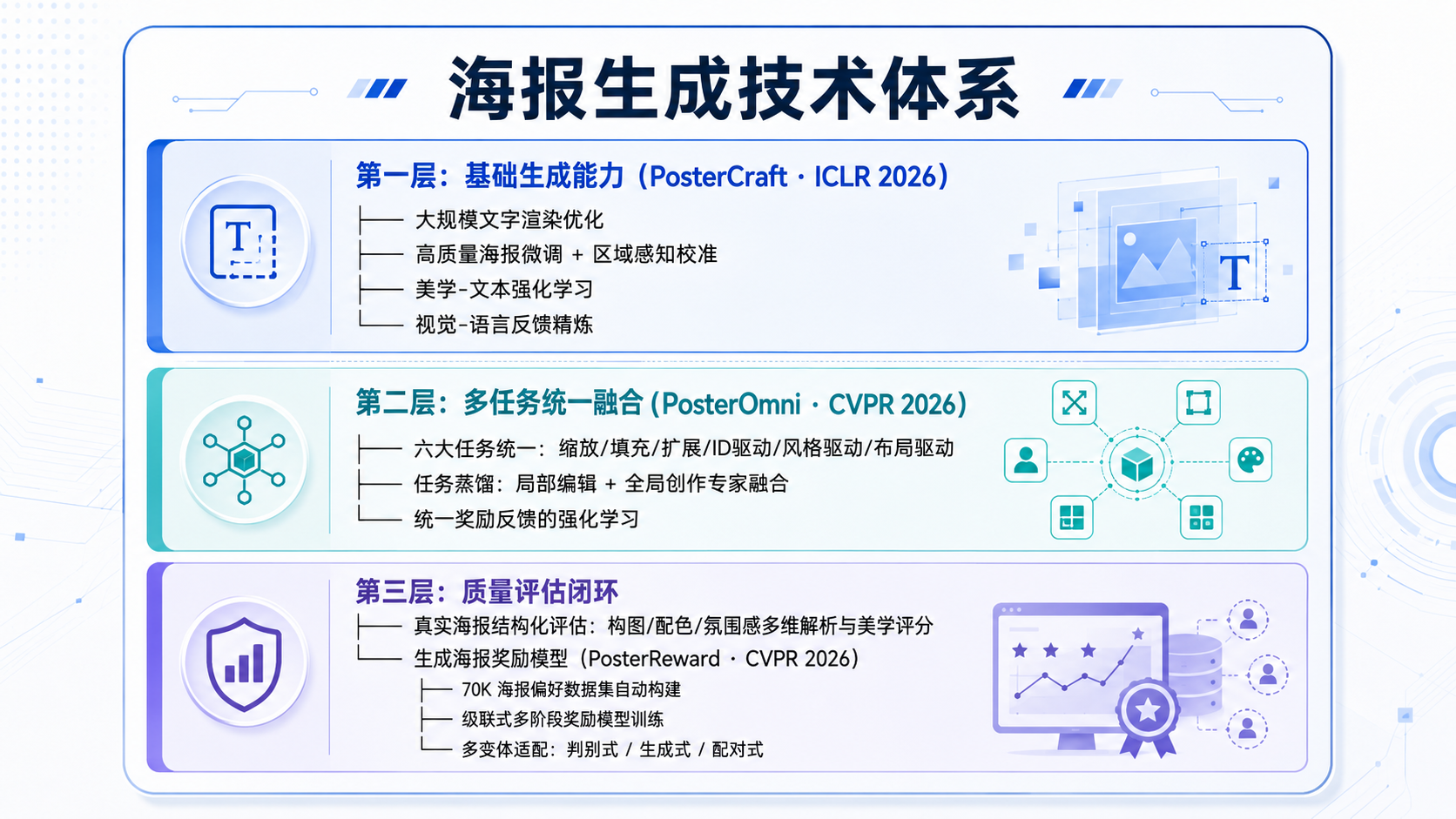
Meituan's Intelligent Creation Team has officially unveiled and open-sourced its comprehensive AIGC technical system for poster generation. The framework is built upon a sophisticated "Generation-Editing-Evaluation" technical closed loop, designed to automate and refine the creative workflow. This system has already seen successful implementation within Meituan Waimai (food delivery) and various Brand IP scenarios, demonstrating its practical utility in high-volume commercial environments. By open-sourcing the entire system, Meituan aims to contribute to the AI community's development of automated design tools. The project emphasizes a seamless transition from initial content creation to manual or automated editing, concluding with a rigorous evaluation phase to ensure visual quality and brand alignment.
Key Takeaways
- Meituan's Intelligent Creation Team has developed a full-stack AIGC system dedicated to automated poster generation.
- The system architecture relies on a "Generation-Editing-Evaluation" technical closed loop to ensure high-quality outputs.
- Practical applications have been established in Meituan Waimai and Brand IP management scenarios.
- The entire technical framework and its components have been made open-source for public and developer use.
- The initiative represents a significant step in integrating AIGC into large-scale commercial marketing workflows.
In-Depth Analysis
The Architecture of the Generation-Editing-Evaluation Loop
Meituan's approach to AIGC poster generation is centered on a tripartite technical closed loop: Generation, Editing, and Evaluation. This structure addresses the common challenges in automated design where initial outputs may require refinement or quality assurance before being deployed in a commercial context.
The Generation phase focuses on the core AIGC capabilities, likely utilizing advanced models to transform data or prompts into visual layouts. However, recognizing that raw AI generation often requires human-in-the-loop adjustments, the Editing component provides the necessary tools to modify and perfect the generated posters. This ensures that the final product meets specific marketing requirements that a purely generative process might miss. Finally, the Evaluation phase serves as the critical quality control layer. By implementing a systematic evaluation process, Meituan ensures that the posters generated and edited meet the aesthetic and functional standards required for their platforms. This closed loop creates a self-reinforcing system that maintains high standards across large volumes of content.
Implementation in Meituan Waimai and Brand IP
The practical deployment of this AIGC system in Meituan Waimai and Brand IP scenarios highlights its scalability. In the context of Meituan Waimai, the demand for visual content is immense, requiring constant updates for promotions, seasonal events, and merchant-specific advertising. The AIGC system allows for the rapid production of these assets while maintaining a consistent visual language.
Furthermore, the application in Brand IP scenarios suggests that the system is capable of adhering to strict brand guidelines. Managing a brand's visual identity across various digital touchpoints is a complex task; by using a structured AIGC framework, Meituan can ensure that every generated poster aligns with the established IP characteristics. The success of these implementations served as the foundation for the decision to release the technology to the broader open-source community.
Industry Impact
Meituan's decision to open-source its AIGC poster generation system marks a significant contribution to the industry's technical landscape. By providing a proven framework that handles the entire lifecycle of a digital asset—from creation to evaluation—Meituan is setting a benchmark for how large-scale enterprises can leverage generative AI.
For the AI and design industries, this move lowers the barrier to entry for other organizations looking to implement similar automated workflows. It also encourages standardization in how AIGC tools are evaluated for commercial readiness. As more developers interact with Meituan's open-source code, the "Generation-Editing-Evaluation" model may become a standard architectural pattern for commercial creative AI, driving further innovation in automated marketing and brand management.
Frequently Asked Questions
Question: What makes Meituan's AIGC system different from standard image generators?
Unlike standalone image generators, Meituan's system is a complete technical closed loop that includes specific modules for editing and evaluation. This ensures that the output is not just a raw image but a commercially viable poster that has passed through quality checks and refinement stages.
Question: In which specific areas of Meituan's business is this technology used?
The technology is currently implemented in Meituan Waimai (the company's food delivery platform) and for managing various Brand IP visual assets, where high-volume and high-consistency design is required.
Question: Is the Meituan AIGC poster generation technology available for external developers?
Yes, Meituan has fully open-sourced the technical system, allowing developers and researchers to access, use, and contribute to the framework developed by the Intelligent Creation Team.