LongCat Open Sources VitaBench 2.0: A New Benchmark for Long-term Dynamic AI Agents
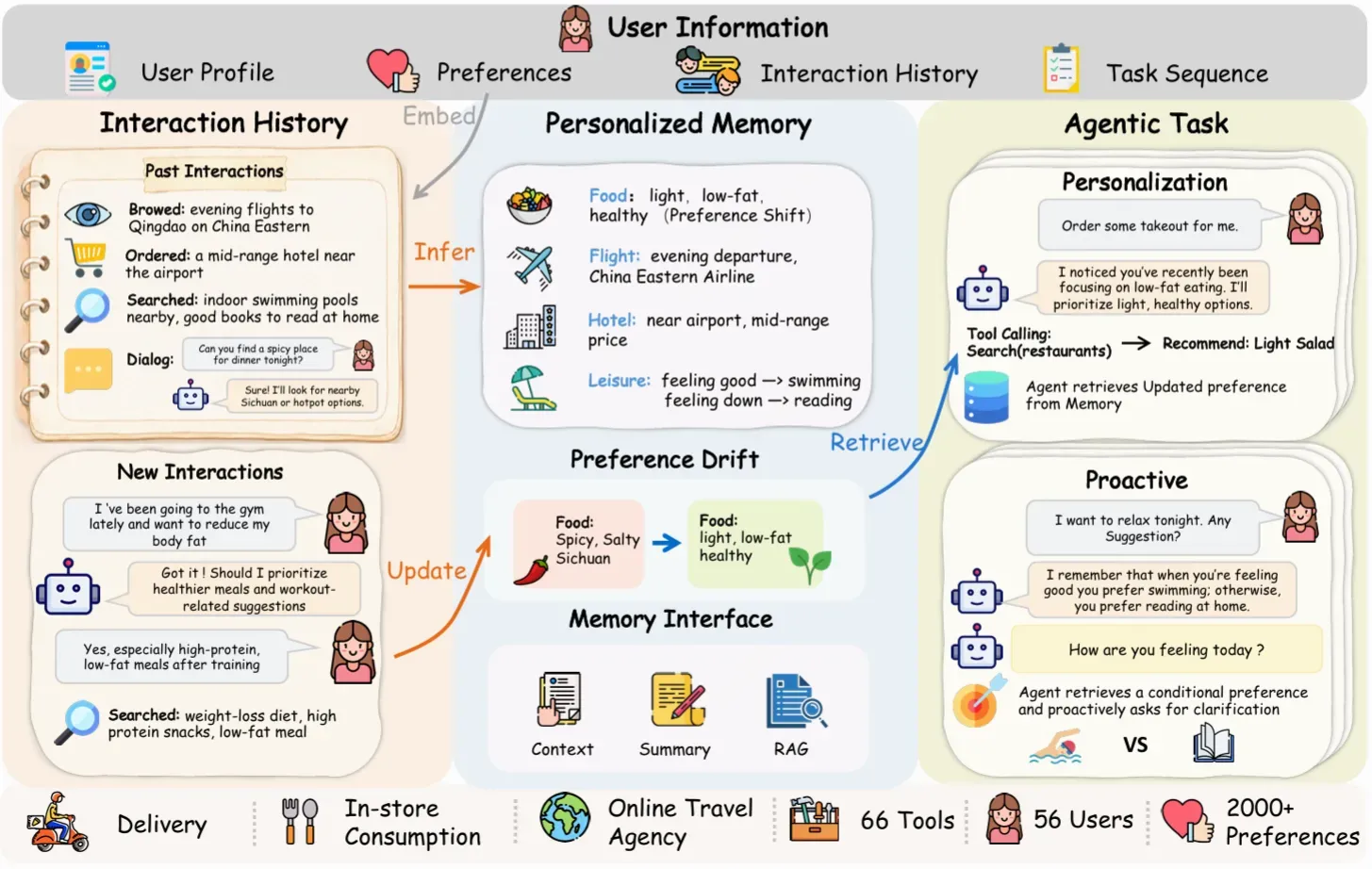
The LongCat team, part of Meituan's technical division, has officially open-sourced VitaBench 2.0, marking a significant milestone in the evaluation of artificial intelligence. As the first benchmark specifically designed for long-term dynamic user modeling in real-life scenarios, VitaBench 2.0 addresses a critical need for more sophisticated assessment tools. It focuses on evaluating Large Language Models (LLMs) based on their ability to maintain personalization and demonstrate proactivity during extended, authentic interactions. By simulating the complexities of real-world user behavior over time, this benchmark provides a systematic framework for developers to measure and improve the long-term relevance and initiative of AI agents, moving beyond static performance metrics toward more human-centric AI development.
Key Takeaways
- First-of-its-Kind Benchmark: VitaBench 2.0 is the inaugural benchmark dedicated to long-term dynamic user modeling within authentic, real-life scenarios.
- Focus on Personalization: The framework systematically evaluates how well Large Language Models (LLMs) can adapt to individual user preferences over extended periods.
- Emphasis on Proactivity: Unlike traditional reactive models, VitaBench 2.0 measures the ability of AI agents to take initiative during user interactions.
- Real-World Simulation: The benchmark is built upon authentic and dynamic user interaction data, ensuring that evaluations reflect practical, everyday utility.
- Open Source Contribution: Developed and released by the LongCat (Meituan Technical Team) to foster industry-wide advancement in agent technology.
In-Depth Analysis
Redefining AI Evaluation through Long-term Dynamics
The release of VitaBench 2.0 by the LongCat team represents a fundamental shift in how the industry perceives and tests the capabilities of AI agents. Historically, benchmarks for Large Language Models have focused on short-term tasks, static knowledge retrieval, or single-turn problem-solving. However, as AI transitions from simple chatbots to sophisticated personal assistants, the need for "long-term dynamic user modeling" has become paramount.
VitaBench 2.0 fills this gap by providing a structured environment where models are tested on their ability to remember, evolve, and respond to a user's changing needs over time. This "dynamic" aspect is crucial; in real life, user preferences are not static. A truly intelligent agent must be able to track these shifts and maintain a coherent, personalized relationship with the user. By focusing on real-life scenarios, VitaBench 2.0 ensures that the models are not just performing well in a laboratory setting but are capable of handling the messy, unpredictable nature of human daily life.
The Core Pillars: Personalization and Proactivity
At the heart of VitaBench 2.0 are two critical metrics that have traditionally been difficult to quantify: personalization and proactivity.
Personalization in the context of this benchmark goes beyond simple name-calling or remembering a favorite color. It involves a deep, systematic evaluation of how an LLM integrates historical interaction data to tailor its responses and services. VitaBench 2.0 assesses whether the agent can build a consistent user profile and apply that knowledge effectively across various long-term threads.
Proactivity, on the other hand, marks the transition from a passive tool to an active assistant. VitaBench 2.0 evaluates whether an AI agent can anticipate user needs or suggest relevant actions without being explicitly prompted for every step. In a long-term interaction, a proactive agent might follow up on a previous task or offer suggestions based on the evolving context of the user's life. By standardizing the measurement of these two traits, LongCat provides a clear roadmap for developers aiming to create agents that feel more like companions and less like software interfaces.
Industry Impact
The introduction of VitaBench 2.0 is poised to have a lasting impact on the AI research and development landscape. By open-sourcing this benchmark, the Meituan Technical Team is providing a common language for researchers to discuss and compare the "intelligence" of agents in a way that aligns with actual human experience.
For the industry, this means a move away from "leaderboard chasing" on static datasets and toward the development of agents that offer genuine long-term value. Companies developing personal assistants, productivity tools, and customer service bots can now use VitaBench 2.0 to ensure their models are capable of maintaining context and taking initiative. Furthermore, as the first benchmark of its kind, it sets a new standard for what constitutes a "sophisticated" AI agent, likely influencing future research directions in memory management, context window utilization, and autonomous planning within the LLM ecosystem.
Frequently Asked Questions
Question: What makes VitaBench 2.0 different from other AI benchmarks?
VitaBench 2.0 is unique because it is the first benchmark to focus specifically on long-term dynamic user modeling in real-life scenarios. While most benchmarks test short-term logic or knowledge, VitaBench 2.0 evaluates how an AI agent evolves its understanding of a user over time and how it maintains personalization and proactivity throughout those interactions.
Question: Who developed VitaBench 2.0 and is it available to the public?
VitaBench 2.0 was developed by the LongCat team, which is part of the Meituan Technical Team. It has been open-sourced, meaning the global AI research community and developers can access and use the benchmark to evaluate their own models and contribute to the advancement of long-term AI agent capabilities.
Question: What are the primary capabilities evaluated by VitaBench 2.0?
The benchmark systematically evaluates two main capabilities: personalization and proactivity. Personalization refers to the model's ability to adapt to specific user needs over time, while proactivity refers to the agent's ability to take initiative and act autonomously within the context of the user's long-term goals and interactions.