Meituan Open Sources AIGC Poster Generation Framework: A Technical Deep Dive into the Generation-Editing-Evaluation Loop
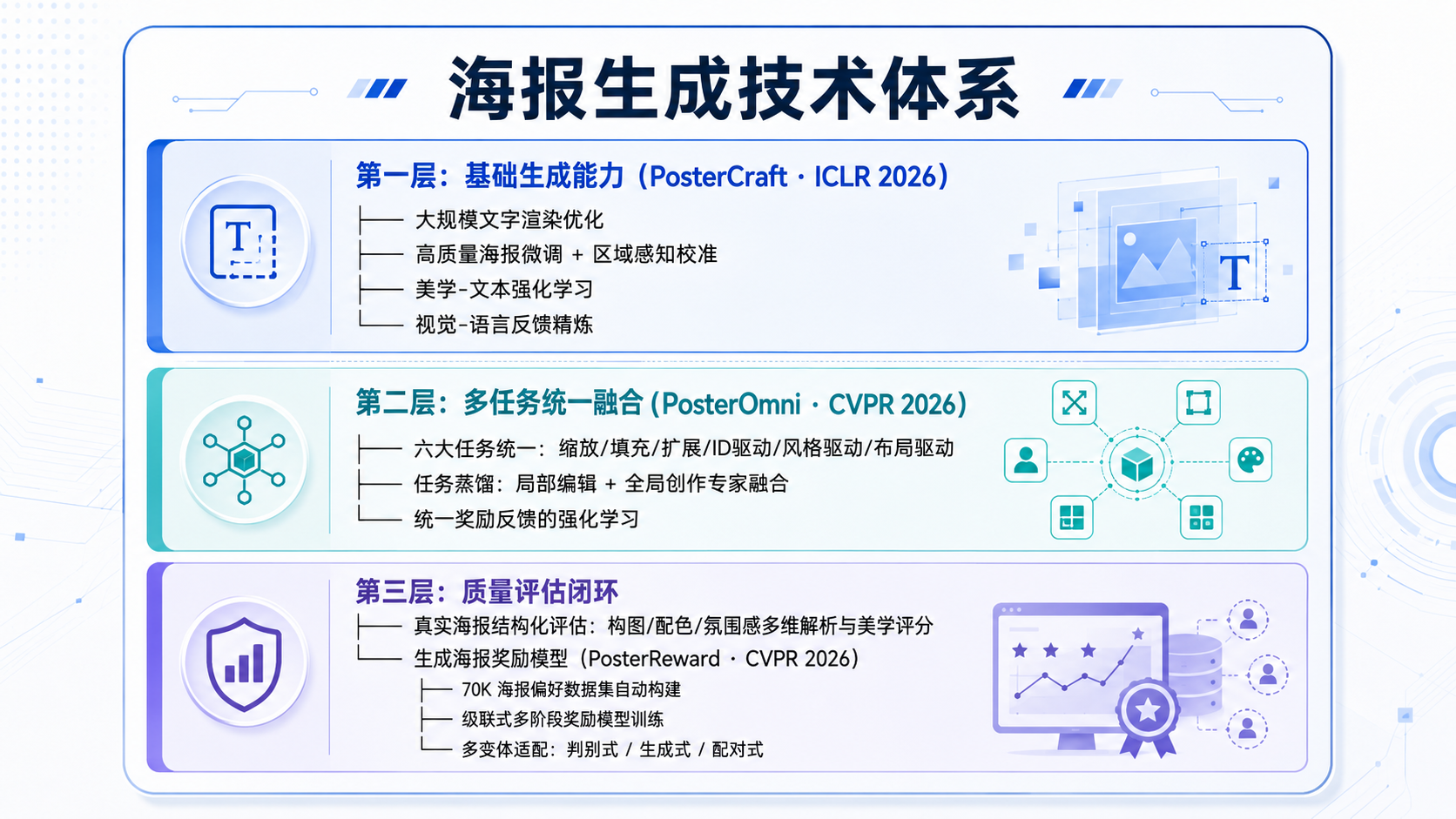
The Meituan Intelligent Creation Team has officially announced the development and open-sourcing of a comprehensive technical system for AIGC-driven poster generation. This innovative framework establishes a robust "Generation-Editing-Evaluation" technical closed loop, designed to automate and optimize the visual content creation process. Currently, the technology has been successfully implemented across high-traffic scenarios, including Meituan Waimai (food delivery) and various brand IP projects. By open-sourcing the entire system, Meituan aims to contribute to the broader AI community, providing tools that bridge the gap between automated image generation and practical, high-quality marketing output. This move highlights a significant shift toward integrated AIGC workflows that prioritize both creative flexibility and quality control in industrial applications.
Key Takeaways
- Comprehensive AIGC Framework: Meituan has built a full-stack technical system specifically for automated poster generation.
- Closed-Loop Methodology: The system operates on a "Generation-Editing-Evaluation" workflow to ensure high-quality results.
- Real-World Deployment: The technology is already active in Meituan Waimai and brand IP scenarios, proving its industrial viability.
- Open Source Commitment: Meituan has fully open-sourced the technology, allowing the global developer community to access and build upon their AIGC innovations.
In-Depth Analysis
The Generation-Editing-Evaluation Technical Closed Loop
At the core of Meituan's AIGC poster system is the "Generation-Editing-Evaluation" (生成-编辑-评判) technical closed loop. This structure addresses one of the primary challenges in industrial AIGC: the gap between raw AI output and professional-grade marketing materials.
The Generation phase focuses on the initial creation of visual assets based on specific prompts or data inputs. However, because raw AI generation can sometimes lack precision or brand consistency, the Editing component is integrated to allow for fine-tuning and structural adjustments. This ensures that the generated posters meet specific layout and aesthetic requirements. Finally, the Evaluation phase serves as a quality gate, using automated metrics or models to judge the effectiveness, clarity, and brand alignment of the final product. By linking these three stages, Meituan has created a self-reinforcing system that minimizes manual intervention while maximizing output quality.
Industrial Application in Food Delivery and Brand IP
Meituan's decision to deploy this technology in the Meituan Waimai and Brand IP sectors demonstrates the practical utility of AIGC in high-volume commercial environments. In the food delivery sector, the demand for localized and merchant-specific promotional materials is immense. Automating poster generation allows for rapid scaling of marketing efforts that would otherwise require significant human design resources.
In the context of Brand IP, the system helps maintain visual consistency across various promotional channels. By utilizing the AIGC framework, Meituan can generate diverse creative assets that adhere to the core identity of their brand characters and intellectual properties. The successful landing of these technologies in such competitive scenarios suggests that the "Generation-Editing-Evaluation" loop is capable of handling complex, real-world design constraints.
Open Source Strategy and Community Impact
By open-sourcing this entire technical system, the Meituan Intelligent Creation Team is positioning itself as a key contributor to the AIGC ecosystem. Open-sourcing a complete "closed-loop" system is particularly significant because it provides developers with more than just a model; it provides a workflow. This move is expected to lower the barrier for other enterprises and independent developers to implement sophisticated image generation pipelines, potentially leading to a standardized approach for industrial AIGC poster creation.
Industry Impact
- Standardization of AIGC Workflows: Meituan's loop model provides a blueprint for how companies can move beyond simple image generation toward a controlled, professional production pipeline.
- Efficiency in Digital Marketing: The automation of poster creation significantly reduces the time-to-market for promotional campaigns, a critical factor in the fast-paced food delivery and e-commerce industries.
- Democratization of Design Tools: Open-sourcing these tools allows smaller players to access high-end design automation technology, fostering innovation across the industry.
Frequently Asked Questions
Question: What makes Meituan's AIGC poster system different from standard image generators?
Unlike standard generators that produce a single image, Meituan's system incorporates an "Editing" and "Evaluation" phase. This ensures that the output is not just a random image, but a structured marketing asset that meets specific quality and brand standards.
Question: In which specific Meituan services is this technology currently used?
According to the Meituan Technical Team, the system is currently deployed in Meituan Waimai (food delivery) and for various Brand IP scenarios to generate promotional and creative content.
Question: Is the source code for this system available to the public?
Yes, Meituan has confirmed that the technical system for AIGC poster generation has been fully open-sourced, making it available for the developer community to use and study.