Meituan Open-Sources LongCat-Next: A Native Multimodal Model for Physical World AI Perception
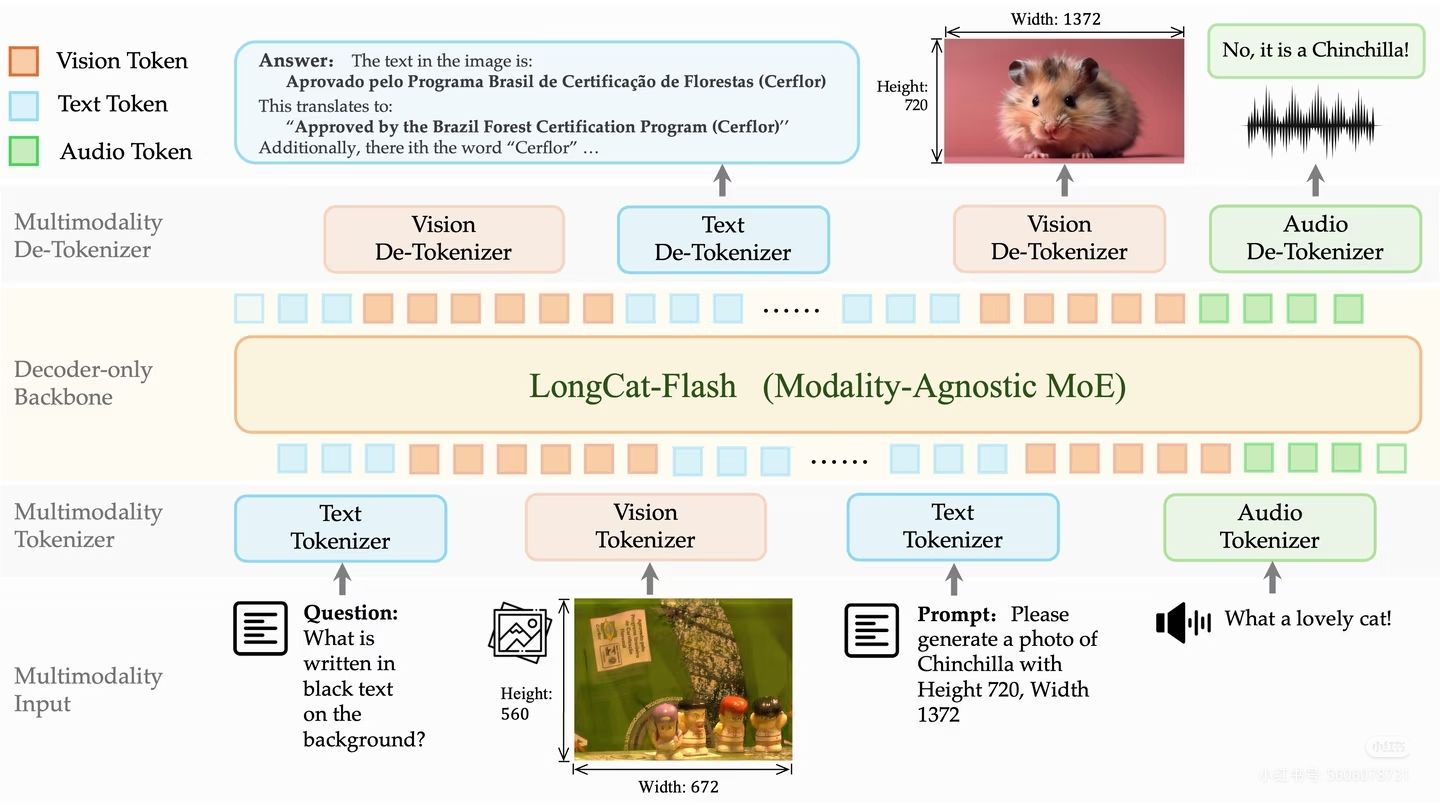
Meituan's technical team has officially released and open-sourced LongCat-Next, a native multimodal model designed to bridge the gap between artificial intelligence and the physical world. By treating vision and speech as "native languages," the model aims to empower AI with the ability to perceive, understand, and interact with real-world environments. The release includes the core LongCat-Next model and its specialized discrete tokenizer, offering developers a foundation for building advanced AI systems capable of physical agency. This initiative reflects Meituan's strategic exploration into embodied AI and its commitment to fostering an open-source ecosystem for multimodal research.
Key Takeaways
- Native Multimodality: LongCat-Next integrates vision and speech as core components, treating them as native languages rather than secondary inputs.
- Open-Source Contribution: Meituan has made both the LongCat-Next model and its discrete tokenizer available to the public developer community.
- Physical World Focus: The project is specifically designed to advance AI's capability to perceive, understand, and act within the physical world.
- Developer Empowerment: By open-sourcing these tools, Meituan aims to facilitate the creation of AI that can interact with real-world scenarios more effectively.
In-Depth Analysis
The Shift Toward Physical World AI
LongCat-Next represents a significant step in Meituan's research trajectory, focusing on the transition from digital-centric AI to systems that can navigate the complexities of the physical world. The technical team describes this model as an exploration into "physical world AI," suggesting a move toward embodied intelligence. Unlike traditional models that may process visual or auditory data through external plugins or translation layers, LongCat-Next is built on the philosophy that vision and speech should be the "native languages" of the AI. This approach is intended to create a more seamless and intuitive understanding of environmental stimuli, allowing the AI to process sensory information with the same fluency that previous models processed text.
Open-Sourcing the Core Architecture
In a move to accelerate industry-wide progress, Meituan has open-sourced the core research components of the LongCat-Next project. This includes the model itself and, crucially, the discrete tokenizer. The tokenizer is a vital component in multimodal systems, as it is responsible for converting continuous visual and auditory signals into discrete units that the model can process. By providing these tools, Meituan is lowering the barrier to entry for developers who wish to build applications that require a deep understanding of the physical environment. The goal is to foster a collaborative environment where the community can refine these models to build AI that does not just observe the world, but acts upon it.
Perception, Understanding, and Action
The core objective of LongCat-Next is to enable a three-step process for AI: perception, understanding, and action. Perception involves the intake of visual and auditory data; understanding requires the model to contextualize that data within the framework of the physical world; and action implies the ability for the AI to generate meaningful responses or physical interactions based on that understanding. By integrating these capabilities into a single native multimodal framework, LongCat-Next aims to provide a more robust solution for real-world AI applications, ranging from logistics to interactive robotics, where the ability to interpret the surrounding environment is paramount.
Industry Impact
The release of LongCat-Next highlights the growing importance of native multimodality in the AI industry. As the field moves beyond text-based Large Language Models (LLMs), the focus is shifting toward Large Multimodal Models (LMMs) that can handle diverse data types natively. Meituan's decision to open-source this technology could influence how other tech giants approach physical world AI, potentially standardizing certain aspects of multimodal tokenization and perception. For the broader industry, this provides a new set of high-quality tools for developing autonomous systems and smart interfaces that require a more human-like perception of their surroundings.
Frequently Asked Questions
Question: What specific components of the LongCat-Next project have been open-sourced?
Answer: Meituan has open-sourced the core LongCat-Next model and its discrete tokenizer, which are the primary tools used for processing vision and speech as native modalities.
Question: How does LongCat-Next differ from traditional AI models?
Answer: Unlike models that primarily focus on text, LongCat-Next treats vision and speech as native languages. It is specifically designed to help AI perceive, understand, and act within the physical world rather than just the digital realm.
Question: Who is the intended audience for the LongCat-Next open-source release?
Answer: The release is aimed at developers and researchers who are interested in building AI systems that can interact with and understand the real, physical world through multimodal perception.