Meituan Open Sources Innovative AIGC Poster Generation System Featuring a Comprehensive Technical Closed-Loop
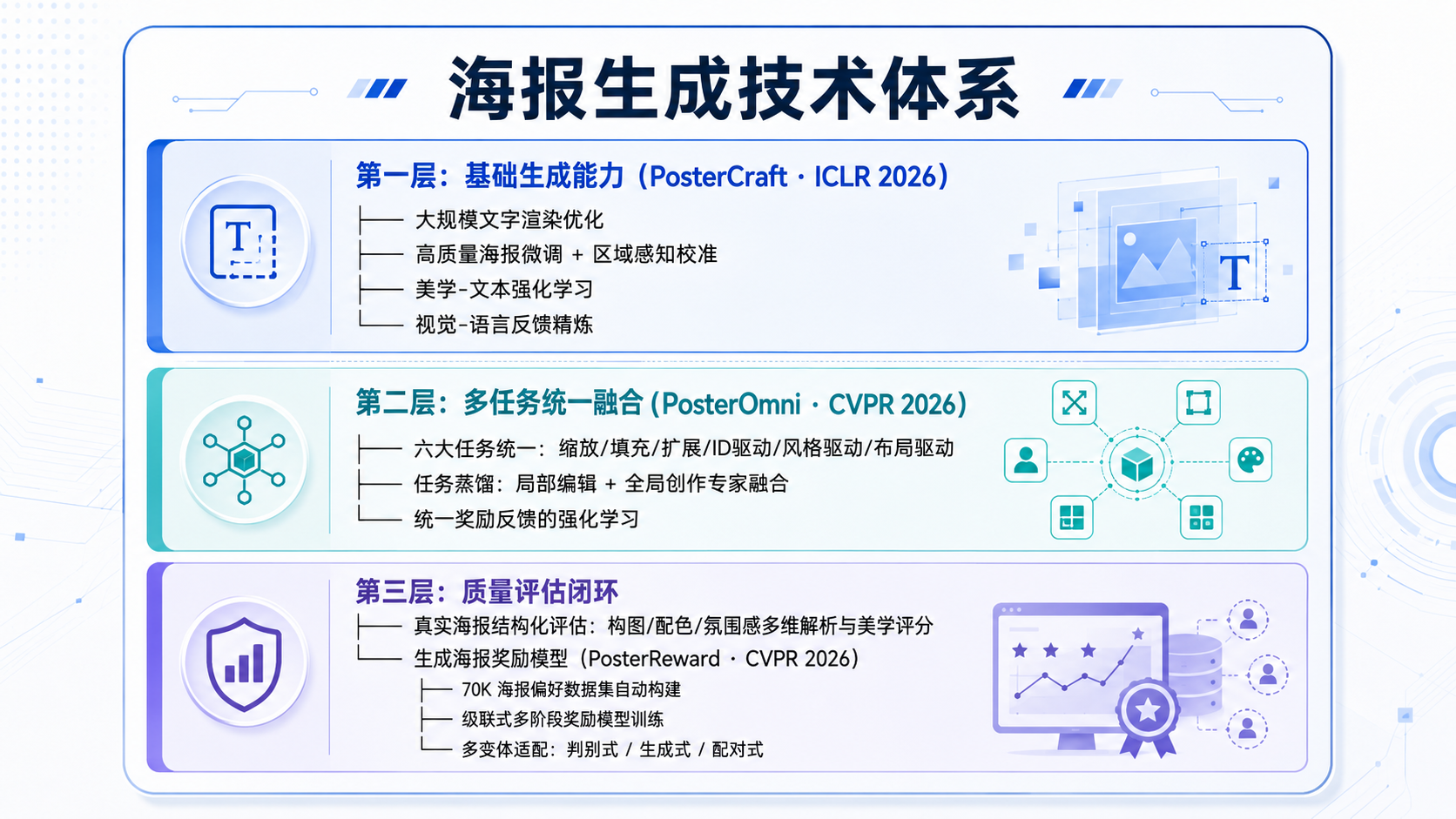
Meituan's Intelligent Creation Team has officially announced the development and open-sourcing of a robust technical system for AIGC-driven poster generation. The framework is built upon a unique "Generation-Editing-Evaluation" technical closed-loop, designed to streamline the creative workflow from initial conception to final quality assessment. Currently, this technology has been successfully implemented in practical business scenarios, including Meituan Waimai (food delivery) and various Brand IP projects. By making the entire system open-source, Meituan aims to contribute to the AI community and foster innovation in automated design. This move highlights the transition of AIGC from experimental phases to scalable, real-world industrial applications within the Meituan ecosystem.
Key Takeaways
- Comprehensive Technical System: Meituan has developed a full-stack AIGC framework specifically for poster generation.
- Closed-Loop Methodology: The system operates on a "Generation-Editing-Evaluation" workflow, ensuring a complete cycle of creation and refinement.
- Real-World Application: The technology is already active in Meituan Waimai and Brand IP scenarios, proving its commercial viability.
- Open-Source Commitment: Meituan has made the entire technical system available to the public, encouraging community-driven development.
In-Depth Analysis
The "Generation-Editing-Evaluation" Technical Closed-Loop
At the core of Meituan's AIGC innovation is the establishment of a "Generation-Editing-Evaluation" technical closed-loop. This structure represents a significant shift from linear AI generation to a more iterative and controlled creative process. In the "Generation" phase, the system leverages AI models to produce initial poster designs based on specific inputs. However, recognizing that raw AI output often requires fine-tuning, the "Editing" component allows for precise adjustments, ensuring the visual content aligns with brand guidelines and specific promotional needs.
Critically, the "Evaluation" stage completes the loop. By integrating an evaluation mechanism, Meituan's system can objectively assess the quality, aesthetic appeal, and relevance of the generated posters. This feedback loop is essential for maintaining high standards in commercial environments where visual consistency is paramount. This systematic approach addresses common pain points in AIGC, such as unpredictability and the lack of quality control, by providing a structured path from a prompt to a production-ready asset.
Practical Implementation in Meituan Waimai and Brand IP
The practical utility of this AIGC system is demonstrated through its deployment in Meituan Waimai and Brand IP scenarios. In the context of food delivery (Waimai), the demand for high-volume, localized, and time-sensitive promotional materials is immense. Meituan's AIGC system allows for the rapid generation of posters that can be tailored to different merchants, cuisines, and seasonal campaigns, significantly reducing the manual workload for designers.
Furthermore, the application in Brand IP scenarios suggests that the system is capable of handling complex brand elements and maintaining visual identity across various media. By automating the more repetitive aspects of the design process, Meituan's Intelligent Creation Team enables human designers to focus on higher-level creative strategy while the AI handles the scale. The successful integration into these high-traffic platforms serves as a benchmark for how large-scale enterprises can leverage AIGC to enhance operational efficiency and marketing agility.
Industry Impact
Meituan's decision to open-source its AIGC poster generation system is a landmark move for the industry. It signals a shift toward transparency and collaborative growth in the field of intelligent content creation. By sharing a system that has already been battle-tested in massive commercial environments like Meituan Waimai, the company provides a blueprint for other organizations looking to implement AIGC at scale.
Moreover, the focus on a "closed-loop" system sets a new standard for AI design tools. It emphasizes that generation is only one part of the equation; for AI to be truly useful in a professional setting, it must be accompanied by robust editing and evaluation capabilities. This release is likely to accelerate the adoption of AIGC in the advertising and design sectors, as developers can now build upon a proven framework rather than starting from scratch. Meituan's contribution helps bridge the gap between theoretical AI research and practical, industry-grade applications.
Frequently Asked Questions
Question: What makes Meituan's AIGC poster system different from standard image generators?
Unlike simple text-to-image generators, Meituan's system is a comprehensive technical framework that includes dedicated modules for editing and evaluation. This ensures that the generated posters are not just creative, but also meet specific commercial standards and can be refined for professional use.
Question: How does the open-source nature of this project benefit the AI community?
By open-sourcing the system, Meituan allows developers and researchers to access a production-ready AIGC workflow. This promotes innovation, as the community can improve upon the existing code, adapt it to new industries, and contribute to the overall evolution of automated design technologies.
Question: In which specific areas has Meituan already deployed this technology?
The technology is currently being used in Meituan Waimai (food delivery) for promotional materials and in Brand IP scenarios to create consistent visual content for the company's various brand assets.