Meituan LongCat Team Launches WBench: The First Systematic Multi-Round Evaluation Benchmark for Interactive Video World Models
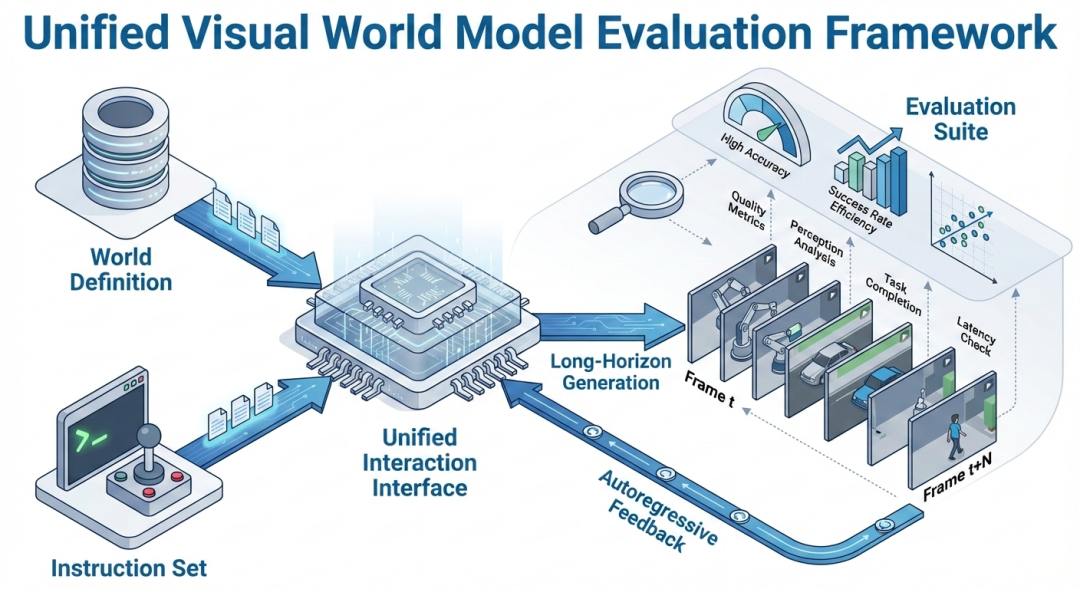
The Meituan LongCat team has officially introduced and open-sourced WBench, a groundbreaking systematic multi-round evaluation benchmark designed specifically for interactive video world models. Described as a diagnostic "CT scanner" for AI, WBench is engineered to pinpoint the exact limitations of current models as they transition from passive observation to active, multi-turn interaction. By providing a structured framework for assessment, WBench allows researchers to identify where world models struggle in complex scenarios, ranging from lunar simulations to futuristic urban environments. This open-source initiative marks a significant milestone in the AI industry, offering a standardized tool to measure the boundaries of world models and facilitating the development of more sophisticated, interactive artificial intelligence systems.
Key Takeaways
- Pioneering Benchmark: WBench is the first systematic multi-round evaluation framework specifically designed for interactive video world models.
- Diagnostic Precision: The tool acts as a "CT scanner," providing a detailed diagnostic look at where models fail during the transition from passive viewing to active interaction.
- Open Source Contribution: Meituan's LongCat team has open-sourced the benchmark to foster industry-wide standardization and collaborative improvement.
- Focus on Interaction: Unlike traditional benchmarks, WBench emphasizes multi-round, interactive capabilities, testing the depth and consistency of AI-generated worlds.
In-Depth Analysis
The Evolution from Passive Observation to Active Interaction
In the current landscape of artificial intelligence, world models have primarily been evaluated on their ability to generate or predict video content based on static prompts—a process often described as "passive viewing." However, the next frontier for AI involves "active interaction," where the model must not only generate a visual environment but also respond dynamically to user inputs over multiple sequences. The Meituan LongCat team identified a critical gap in this evolution: the lack of a systematic way to measure how well these models maintain coherence and logic during interactive sessions.
WBench addresses this by shifting the focus toward interactive video world models. By simulating environments that require multi-round engagement—ranging from the low-gravity physics of a "moonwalk" to the complex architectural density of a "cyber city"—WBench tests whether a model can sustain a consistent reality. This transition is vital for applications in robotics, autonomous driving, and immersive simulations, where the AI must act as a participant in the world it perceives rather than a mere spectator.
WBench as a Diagnostic "CT Scanner" for AI
The LongCat team describes WBench using the metaphor of a "CT scanner." This choice of words highlights the benchmark's role as a diagnostic tool rather than a simple leaderboard. Traditional benchmarks often provide a single score that indicates whether a model is "good" or "bad," but they rarely explain why a model fails. WBench is designed to look beneath the surface, pinpointing the exact "blockages" in a model's logic or generative process.
By employing a multi-round evaluation strategy, WBench can track the degradation of a model's performance over time. In a single-round test, a model might produce a convincing image or short clip. However, in a multi-round interactive scenario, the model must remember previous states and ensure that new actions result in logical outcomes. WBench analyzes these sequences to find the specific point where the world model's internal logic breaks down. This level of granularity is essential for researchers who need to understand the boundaries of their models to iterate and improve them effectively.
Industry Impact
The introduction of WBench by the Meituan LongCat team is poised to have a significant impact on the AI research community. By open-sourcing the benchmark, Meituan is providing a much-needed standard for a rapidly growing field. As more companies and research institutions develop their own world models, having a common "CT scanner" allows for transparent comparisons and a clearer understanding of the state of the art.
Furthermore, the focus on multi-round interaction pushes the industry toward more practical and robust AI applications. If world models are to be used in real-world decision-making or complex simulations, they must be able to handle the unpredictability of interaction. WBench sets a high bar for what constitutes a successful world model, moving the conversation beyond simple visual fidelity toward functional, interactive intelligence. This could accelerate breakthroughs in embodied AI, where agents must navigate and interact with physical or simulated worlds with high degrees of reliability.
Frequently Asked Questions
Question: What makes WBench different from existing AI video benchmarks?
Unlike traditional benchmarks that focus on the quality of a single generated video clip (passive viewing), WBench is the first to systematically evaluate "interactive" world models through multiple rounds of engagement. It focuses on how the model responds to actions and maintains consistency over time.
Question: Why did the Meituan LongCat team open-source WBench?
By open-sourcing WBench, the team aims to provide the global AI community with a standardized tool to diagnose and measure the capabilities of world models. This encourages collaboration and helps the industry as a whole identify and overcome the technical boundaries of interactive AI.
Question: What does the "CT scanner" metaphor imply for AI developers?
It implies that WBench does more than just rank models; it provides a detailed diagnostic report. It helps developers see "inside" the performance of their models to identify exactly where the transition from passive observation to active interaction fails, allowing for more targeted improvements.