Managing AI Coding with Agent Evaluation Logic: A Case Study of 310,000 Lines of Code Refactoring
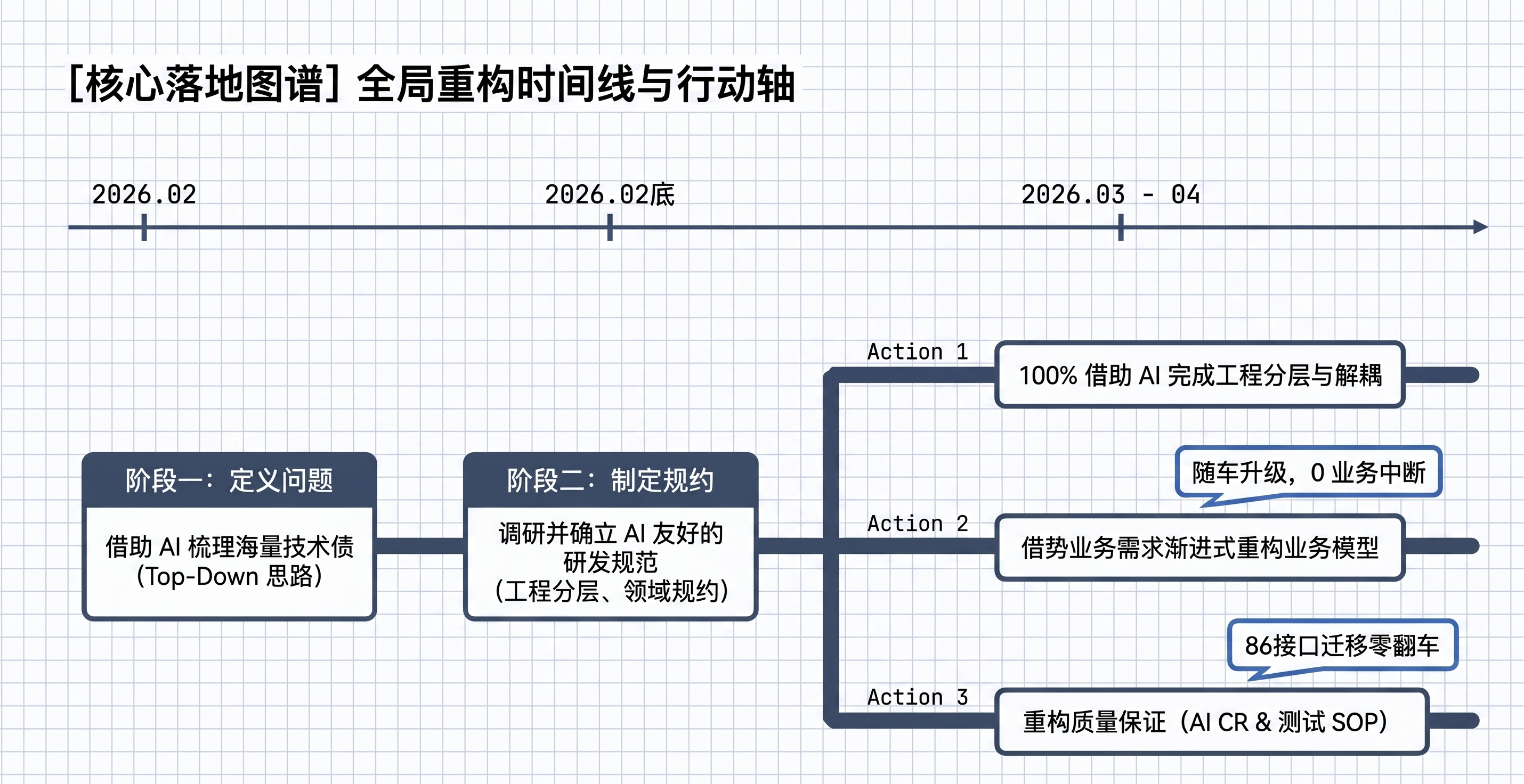
The Meituan Technical Team has introduced a groundbreaking approach to managing AI-driven software development, focusing on the refactoring of 310,000 lines of code. As AI now generates over 90% of code in certain environments, the primary challenge has shifted from development speed to the implementation of strict constraints. Without unified standards, AI-generated content can significantly amplify technical chaos. To address this, the team utilized Agent evaluation logic to oversee AI coding through four key pillars: technical debt sorting, rule construction, a standardized operating procedure (SOP) for refactoring, and a Pre-PR (Pull Request) mechanism. This framework successfully transforms high-cost, specialized refactoring projects into sustainable, daily iterative actions, ensuring long-term system stability in the era of AI-dominated programming.
Key Takeaways
- Shift in Focus: When AI generates more than 90% of a system's code, the critical factor for success is the ability to constrain and regulate AI, rather than the speed of generation.
- Agent-Based Management: The use of Agent evaluation logic provides a structured framework to manage the inherent risks of AI-generated code amplification of chaos.
- Four-Pillar Strategy: The methodology relies on systematic technical debt sorting, the establishment of clear rules, a standardized operating procedure (SOP), and a Pre-PR mechanism.
- Operational Efficiency: This approach transitions code refactoring from an expensive, one-time specialized task into a continuous, low-cost daily activity integrated into the standard development cycle.
In-Depth Analysis
The Paradigm Shift: Managing Constraints Over Speed
In the traditional software development lifecycle, human developers were the primary bottleneck, making coding speed a high-priority metric. However, as the Meituan Technical Team points out, the landscape has fundamentally changed with the advent of AI. When AI is responsible for generating over 90% of the codebase, the bottleneck is no longer how fast code can be produced, but how effectively that code can be governed. The core risk identified is that without a unified set of standards and constraints, AI does not just create code; it exponentially increases the complexity and disorder within a system. The practice of refactoring 310,000 lines of code demonstrates that the management of AI coding must move away from simple generation toward a model of rigorous oversight and constraint-based guidance.
Structural Components of AI-Driven Refactoring
To manage this transition, the Meituan team implemented a multi-layered strategy based on Agent evaluation logic. This strategy is built upon four essential components designed to maintain code quality and system integrity:
- Technical Debt Sorting: Before refactoring can begin, there must be a clear understanding of existing issues. By systematically identifying technical debt, the team can prioritize which areas require AI intervention.
- Rule Construction: AI requires explicit boundaries to function effectively within a specific architecture. Establishing these rules ensures that the AI-generated code adheres to the organization’s specific standards and avoids the "chaos amplification" effect.
- Refactoring SOP (Standard Operating Procedure): By standardizing the steps for refactoring, the team ensures consistency across the 310,000 lines of code, regardless of which specific AI agent or human developer is overseeing the task.
- Pre-PR Mechanism: The introduction of a Pre-PR (Pull Request) mechanism acts as a final gatekeeper. This allows for the evaluation of AI-generated refactoring before it is merged into the main codebase, ensuring that the changes meet the predefined rules and do not introduce new technical debt.
By integrating these components, the team has successfully moved refactoring from a "high-cost专项" (special project) to a "随迭代持续推进的日常动作" (continuous daily action). This ensures that the codebase remains healthy throughout its lifecycle rather than allowing debt to accumulate until a massive, expensive intervention is required.
Industry Impact
This practice by Meituan sets a significant precedent for the broader AI and software engineering industries. As more companies integrate Large Language Models (LLMs) into their development workflows, the "Meituan Model" of Agent-based evaluation offers a roadmap for maintaining quality at scale. It highlights a future where the role of the human engineer evolves from a "writer" to a "governor" or "architect of constraints." Furthermore, by proving that large-scale refactoring (310,000 lines) can be turned into a routine task, this methodology suggests a path toward significantly reducing the long-term maintenance costs of complex software systems, potentially solving the perennial problem of technical debt in the software industry.
Frequently Asked Questions
Question: Why is Agent evaluation logic necessary for AI coding?
AI, while efficient, lacks the inherent understanding of long-term architectural goals and can amplify existing inconsistencies in a codebase. Agent evaluation logic provides a systematic way to apply constraints and rules, ensuring that the AI's output aligns with human-defined standards and prevents systemic chaos.
Question: How does the Pre-PR mechanism improve the refactoring process?
The Pre-PR mechanism serves as a critical validation step. It allows the system to evaluate AI-generated changes against established rules and technical debt criteria before the code is officially submitted for review. This reduces the burden on human reviewers and ensures that only high-quality, compliant code reaches the final stages of the development pipeline.
Question: Can this approach be applied to smaller codebases?
While the Meituan practice focused on a massive 310,000-line refactoring project, the principles of technical debt sorting, rule construction, and SOPs are scalable. These methods can help any team using AI to generate code maintain a clean and manageable codebase, regardless of the project's size.