Managing AI Coding Through Agent Evaluation: A 310,000-Line Code Refactoring Case Study
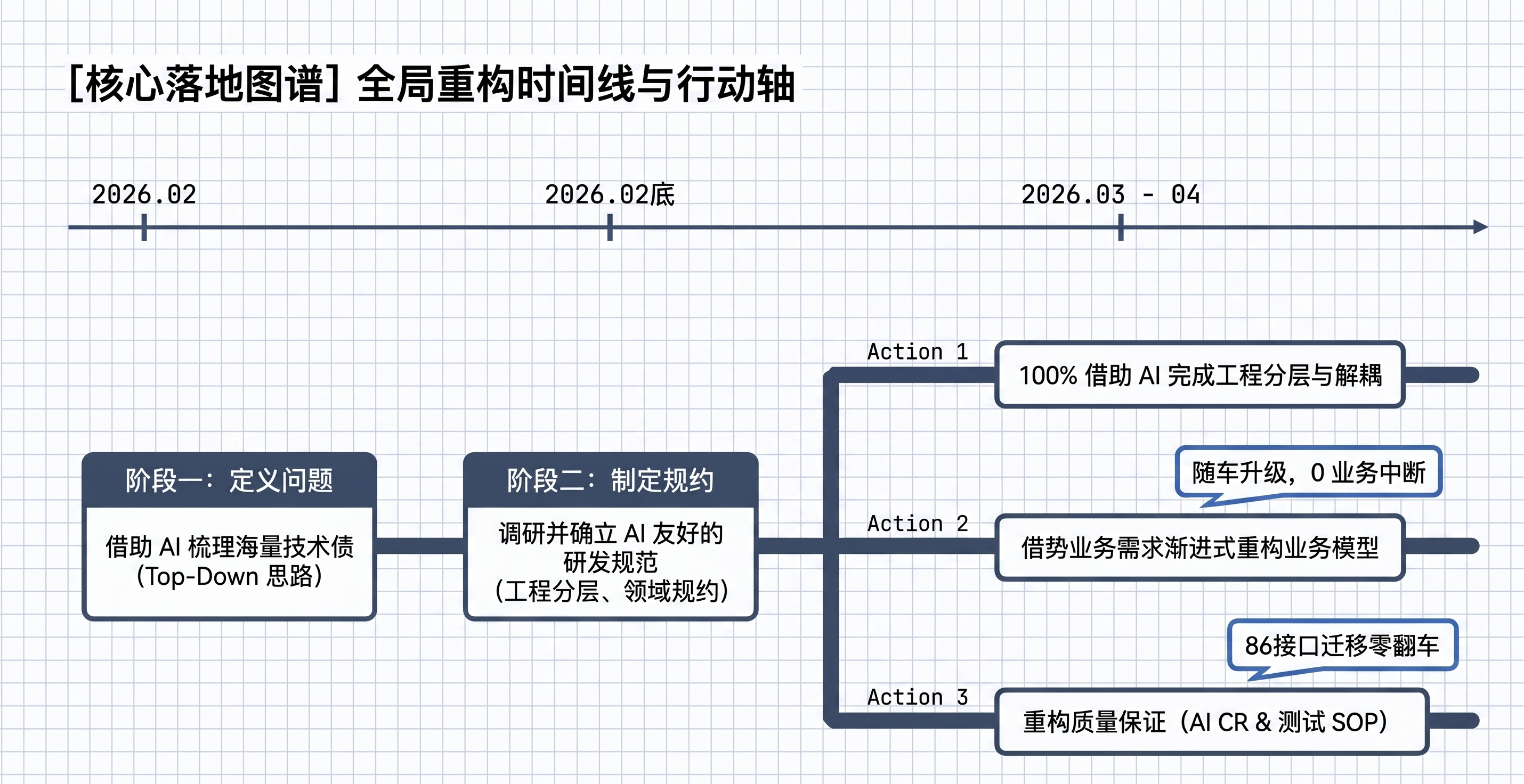
As AI-generated code begins to account for over 90% of total software production, the technical landscape is shifting from a focus on development speed to a focus on systemic constraints. Meituan's technical team recently shared their experience refactoring 310,000 lines of code by applying Agent evaluation methodologies to AI coding management. The core of their strategy involves addressing technical debt, establishing strict rules, and implementing a Refactoring SOP alongside a Pre-PR (Pull Request) mechanism. By transitioning from high-cost, specialized refactoring projects to continuous, iteration-based maintenance, the team has demonstrated how to prevent AI from amplifying system chaos. This case study highlights the necessity of structured frameworks in the era of AI-led development to ensure long-term code quality and system stability.
Key Takeaways
- Constraint Over Speed: In an environment where 90% of code is AI-generated, the primary challenge is not how fast code is written, but how effectively AI capabilities are constrained by unified standards.
- Agent Evaluation Logic: Applying Agent-based evaluation thinking to AI coding allows for better management of automated development processes and code quality.
- Four Pillars of Management: The successful refactoring of 310,000 lines of code relied on technical debt sorting, rule construction, a Refactoring SOP, and a Pre-PR mechanism.
- Continuous Integration: Refactoring has been transformed from a high-cost, periodic specialized task into a sustainable daily action integrated with regular development iterations.
In-Depth Analysis
The Challenge of AI-Driven Code Proliferation
The emergence of AI as a primary driver of code generation—now responsible for over 90% of code in certain environments—presents a unique paradox for software engineering. While the speed of production has increased exponentially, the risk of systemic chaos has grown in tandem. Without a unified set of standards and norms, AI does not merely produce code; it has the potential to multiply existing inconsistencies and technical debt. The Meituan technical team identifies that the critical factor in modern system development is no longer the velocity of the AI, but the robustness of the constraints placed upon it. When AI operates without these boundaries, it can amplify disorder, making the system increasingly difficult to maintain and evolve.
Implementing the Agent Evaluation Framework
To address the complexities of large-scale AI coding, the team adopted a management strategy rooted in Agent evaluation logic. This approach was put to the test during a massive project involving the refactoring of 310,000 lines of code. The methodology is built upon several key technical pillars designed to bring order to AI-generated output. First, a comprehensive sorting of technical debt was conducted to identify areas of concern. This was followed by the construction of specific "Rules" that the AI must follow. Furthermore, the team established a Refactoring Standard Operating Procedure (SOP) and a Pre-PR (Pull Request) mechanism. These tools serve as a filter and a guide, ensuring that every piece of code generated or modified by AI undergoes a rigorous check against established standards before being integrated into the main codebase.
From Specialized Projects to Daily Iterations
One of the most significant outcomes of this practice is the cultural and operational shift in how code quality is maintained. Traditionally, large-scale refactoring is viewed as a high-cost, specialized "sprint" or a standalone project that requires significant resources and time. However, by utilizing AI and the Agent evaluation framework, Meituan has successfully integrated refactoring into the daily development cycle. By making refactoring a "daily action" that occurs alongside regular iterations, the team has reduced the overhead associated with technical debt. This continuous approach ensures that the system remains healthy and adaptable, preventing the accumulation of debt that typically necessitates massive, disruptive refactoring efforts in the future.
Industry Impact
The methodology shared by the Meituan technical team sets a significant precedent for the software industry as it moves toward an AI-first development model. As more organizations reach the threshold where the majority of their code is AI-generated, the need for "Agent-aware" management systems will become critical. This case study proves that with the right constraints—such as Pre-PR mechanisms and automated SOPs—large-scale codebases can be maintained and even improved by AI without sacrificing quality. It signals a shift in the role of the human developer from a "writer" to an "architect and evaluator," focusing on the design of the rules and systems that govern AI behavior rather than the manual correction of code.
Frequently Asked Questions
Question: Why is speed no longer the most important metric in AI-assisted coding?
As AI can generate code at a rate far exceeding human capacity, the bottleneck is no longer production but the management of that production. Without strict constraints and unified norms, the high-speed generation of code can lead to an exponential increase in technical debt and system chaos, making the "speed" counterproductive in the long run.
Question: What are the specific mechanisms used to manage the 310,000-line refactoring project?
The project utilized four primary mechanisms: technical debt sorting to identify issues, the construction of specific rules for the AI to follow, a Refactoring Standard Operating Procedure (SOP) to guide the process, and a Pre-PR (Pull Request) mechanism to evaluate code quality before it is merged into the system.