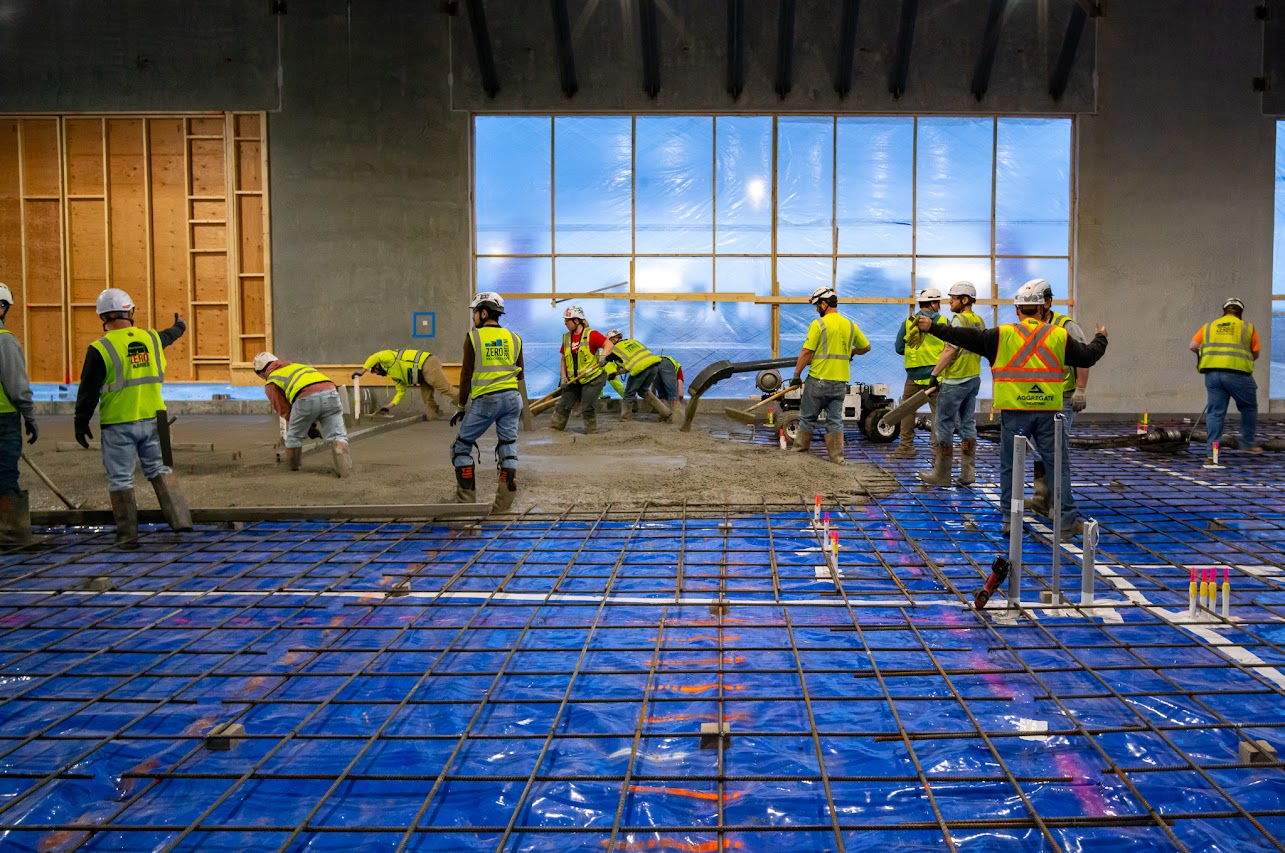
Meta Unveils BOxCrete AI Model to Revolutionize American-Produced Sustainable Concrete and Reduce Cement Imports
Meta has announced a significant advancement in construction technology with the release of Bayesian Optimization for Concrete (BOxCrete), a new AI model designed to optimize concrete mix designs. Launched during the 2026 American Concrete Institute (ACI) Spring Convention, this initiative aims to help the U.S. construction industry produce high-quality, sustainable concrete using domestic materials. While the U.S. produces most of its ready-mix concrete locally, it currently imports approximately 20-25% of its cement. Meta’s open-source model, now available on GitHub, seeks to replace traditional, slow trial-and-error methods with AI-driven efficiency. By leveraging foundational data and Bayesian optimization, Meta intends to support U.S. manufacturing, jobs, and environmental standards while addressing the complex requirements of strength, cost, and sustainability in infrastructure development.
Key Takeaways
- New AI Model Release: Meta has launched BOxCrete (Bayesian Optimization for Concrete), an AI model specifically designed for designing concrete mixes.
- Open Source Accessibility: The model and the foundational data used for award-winning concrete mixes are now available to the public on GitHub.
- Reducing Import Dependency: The initiative targets the 20-25% of cement currently imported by the U.S., promoting the use of American-produced materials.
- Sustainability and Efficiency: AI replaces traditional trial-and-error methods to meet complex requirements for strength, speed, cost, and environmental standards.
In-Depth Analysis
Modernizing the Concrete Mix Design Process
Traditional concrete production has long been a manual and intuition-based industry. Engineers typically rely on decades of accumulated knowledge and expensive lab-based trial-and-error to balance competing factors such as strength, ease of handling, and cost. Meta’s introduction of BOxCrete represents a shift toward data-driven engineering. By utilizing Bayesian Optimization, the model can navigate the complex variables of cementitious materials, aggregates, and chemical admixtures more efficiently than human intuition alone. This transition is critical for the U.S., which pours roughly 400 million cubic yards of concrete annually—an amount sufficient to pave a two-lane highway circling the Earth multiple times.
Strengthening Domestic Manufacturing and Standards
While the United States produces the majority of its ready-mix concrete domestically, a significant vulnerability exists in the supply chain: cement. Approximately one-quarter of the cement used in the U.S. is imported. This reliance on foreign sources can stifle domestic manufacturing, jobs, and investments. Furthermore, cement produced within the U.S. must adhere to specific performance and environmental standards that are often inconsistent with international products. Meta’s AI roadmap focuses on empowering U.S. suppliers to leverage domestic materials, ensuring that the backbone of American infrastructure—including data centers, bridges, and homes—is built with materials that meet local regulatory and sustainability benchmarks.
Industry Impact
The release of BOxCrete marks a significant intersection between Big Tech and heavy industry. By open-sourcing this technology, Meta is providing the construction sector with high-level computational tools previously reserved for software optimization. This move is expected to accelerate the development of sustainable concrete mixes, reducing the carbon footprint of the construction industry while simultaneously bolstering the American supply chain. As data center construction continues to expand, Meta’s investment in these materials ensures that the physical infrastructure supporting the digital world is both resilient and domestically sourced.
Frequently Asked Questions
Question: What is BOxCrete and how can it be accessed?
BOxCrete stands for Bayesian Optimization for Concrete. It is an AI model developed by Meta to design concrete mixes. It is currently open-source and available for download on GitHub, along with foundational data used for award-winning mixes.
Question: Why is Meta focusing on American-produced cement?
While ready-mix concrete is made in the U.S., about 20-25% of the cement required is imported. Meta aims to help U.S. suppliers use AI to create high-quality mixes domestically, supporting U.S. jobs and ensuring compliance with American environmental and performance standards.
Question: What are the main challenges in traditional concrete design?
Traditional methods rely on lab-based trial-and-error and engineer intuition. This process is slow and expensive, making it difficult to quickly adapt to new requirements for sustainability, cost-efficiency, and material strength.