
Back to List
Journalist Receives Death Threats Over Iran Missile Report Amid Polymarket Gambling Controversy
Industry NewsJournalismConflictGambling

Journalist Receives Death Threats Over Iran Missile Report Amid Polymarket Gambling Controversy

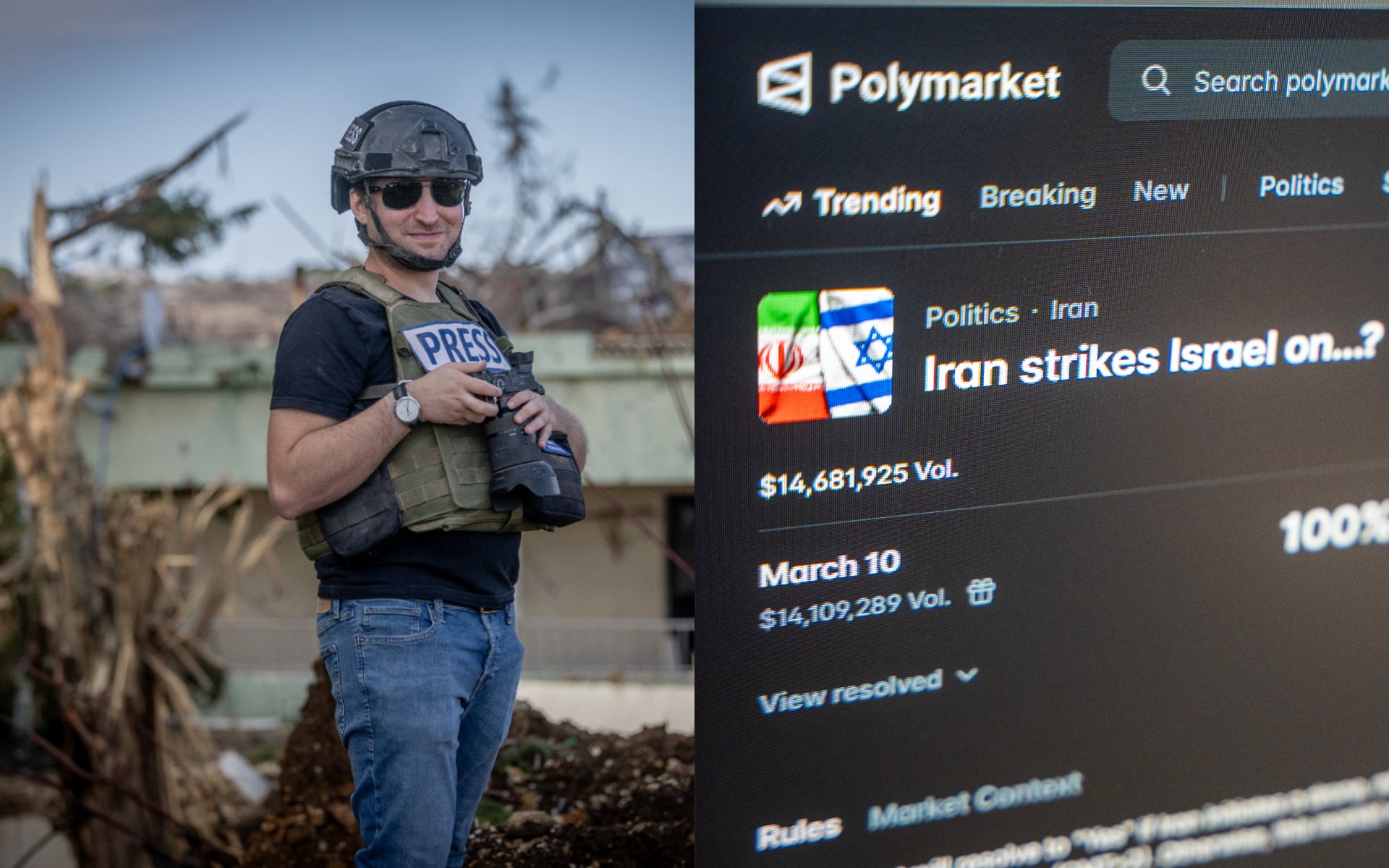
Emanuel Fabian, a military correspondent for The Times of Israel, has reported receiving death threats and harassment following his coverage of an alleged Iranian ballistic missile attack near Beit Shemesh on March 10, 2026. Fabian initially reported, citing rescue services and footage, that a missile struck an open area near the city, causing no injuries. However, he later received an email from an individual named Aviv, claiming that local authorities and MDA had corrected their reports, stating it was an interceptor fragment, not a full missile. This dispute appears linked to a bet on the Polymarket site titled 'Iran strikes Israel on...?', suggesting gamblers are pressuring Fabian to alter his reporting to influence the outcome of the bet.

Hacker News

On March 10, 2026, a significant explosion occurred near Beit Shemesh, outside Jerusalem, which was initially reported as another Iranian ballistic missile attack during the ongoing conflict. Emanuel Fabian, The Times of Israel's military correspondent, reported on the incident for the publication's liveblog. Citing rescue services and visual evidence of a massive explosion, Fabian stated that the missile had impacted an open, forested area approximately 500 meters from residential homes, causing no injuries.

What Fabian initially considered a minor incident in the broader conflict has since escalated into a period of intense harassment and death threats directed at him. The controversy began later on the same Tuesday when Fabian received an unusual email, written in Hebrew, from a person identified as Aviv.

Aviv's email challenged Fabian's report, stating, "Regarding your Times of Israel report that described today’s launch as an ‘impact’ — Beit Shemesh Municipality and MDA (Magen David Adom) later corrected their reports to clarify that what fell was an interceptor fragment, not a full missile." Aviv then requested that Fabian update his article to reflect this alleged correction, or provide further information if he had evidence that it was indeed a full, unintercepted missile.

This pressure on Fabian's reporting is seemingly connected to a bet placed on the Polymarket platform, titled 'Iran strikes Israel on...?', as indicated by a photo taken on March 16, 2026, showing the bet. The implication is that individuals involved in this bet are attempting to influence Fabian's journalistic output to sway the outcome of their wagers.


Related News

Anthropic to Restrict Claude Code Usage with Third-Party Tools Due to Subscription Design Constraints
Industry News

Anthropic to Restrict Claude Code Usage with Third-Party Tools Due to Subscription Design Constraints

Anthropic has announced plans to restrict the use of Claude Code when integrated with third-party tools and harnesses. The decision was communicated by Boris Cherny, the head of Claude Code, via a statement on X (formerly Twitter). According to Cherny, the current subscription models for Claude Code were not originally designed to accommodate the specific usage patterns generated by external third-party harnesses. This move highlights a strategic shift in how Anthropic manages its developer tools and subscription structures, ensuring that usage remains aligned with the intended design of their service tiers. The restriction aims to address discrepancies between user behavior on third-party platforms and the underlying subscription framework provided by Anthropic.

India’s Gujarat High Court Implements Strict Restrictions on AI Usage Within Judicial Decision-Making Processes
Industry News

India’s Gujarat High Court Implements Strict Restrictions on AI Usage Within Judicial Decision-Making Processes

The Gujarat High Court in India has officially established new boundaries regarding the integration of Artificial Intelligence within the judicial system. According to recent reports, the court has restricted the use of AI in formal judicial decisions, while still permitting its application for specific supportive roles. Under the new guidelines, AI technologies can be utilized for administrative tasks, legal research, and IT automation. However, a critical caveat remains: all AI-generated outputs must undergo a mandatory review by a human officer to ensure accuracy and accountability. This move highlights a cautious approach to legal tech, prioritizing human oversight in the delivery of justice while leveraging automation for operational efficiency.

Industry News

The Microsoft Copilot Naming Paradox: Mapping Over 75 Different Products Under One Brand Name

A recent investigation into Microsoft's branding strategy reveals a complex ecosystem where the name 'Copilot' now represents at least 75 distinct entities. The research, compiled from various product pages, launch announcements, and marketing materials, highlights that 'Copilot' is no longer just a single AI assistant. Instead, it encompasses a vast array of applications, features, platforms, physical hardware like keyboard keys, and even an entire category of laptops. The study found that no single official source, including Microsoft’s own documentation, provides a comprehensive list of these products. This fragmentation has led to significant confusion, as the brand now simultaneously refers to end-user tools and the infrastructure used to build additional AI assistants.